As this paper is being written, the Saturn I flight test program includes five flights launched between October, 1961 and January, 1964. All five fiights were complete successes, both in achieving all major test missions and in obtaining an unprecedented volume of system performance data for flight analysis.
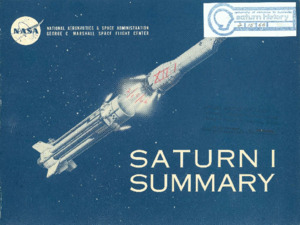
This brochure provides some basic, general information about the lnstrument Unit, a very important part of the Saturn IB and Saturn V launch vehicles. These launch vehicles are being developed primarily for the Apollo program for manned lunar exploration but will also be used for future space missions.
Presented at Safety Engineering of Missile/Space Systems, 53rd Air Force - Industry Conference, detailing potential safety issues within the Atlas weapon system.
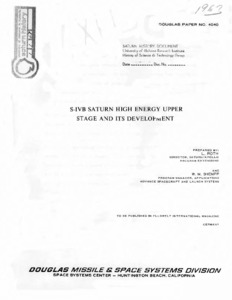
The development of carrier rockets For manned space missions has been one of the major activities in the aerospace field during the past decade. The early space efforts were made possible by the existence of large ballistics missiles. It soon became obvious that the delivery of weapons and the launch of large spacecraft could not be combined into one operational system in an efficient way; therefore, a family of spacecraft boosters had to be created.
The Workshop project calls for changing a spent Saturn S-IVB propulsion stage into. living and working quarters after it has propelled itself into space.
Paper to be presented at the Third International Flight Test Instrumentation Symposium College of Aeronautics. A brief description of the Saturn vehicles is given, delineating the makeup of and differences between the Saturn I, Saturn IB, and Saturn V.
Speech to be delivered to Joint AIAA/ASME Student Chapters Meeting, University of Tennessee, Knoxville, Tennessee. Speech focusing on their future endeavors and missions into space.