
Browse Items (8242 total)
Sort by:
-
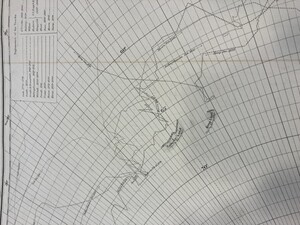
South Polar Chart
Chart showing tracks of expeditions to Antarctica -
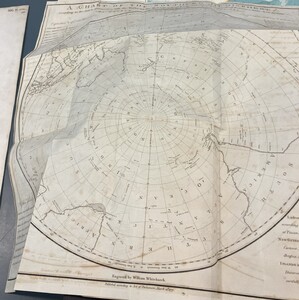
A Voyage Round the World Chart
Chart showcasing Cook's second voyage, with the pole labeled as the Southern Icy Ocean. -
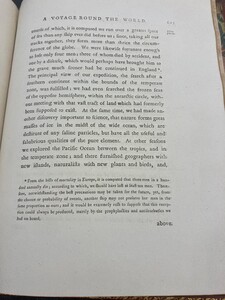
A Voyage Round the World Text
Text from A Voyage Round the World showcasing the conditions met on the journey, and the search for Antarctica -
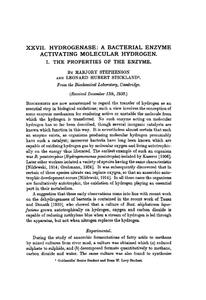
Hydrogenase: a bacterial enzyme activating molecular hydrogen
This document is a copy of one of Marjory Stephenson's, along with her colleague L.H. Strickland, most important papers, the discovery of the hydrogenase enzyme. It is just one of her many research papers on enzymes that laid the foundation for detailed studies of metabolism, both in bacteria and higher-level organisms. -
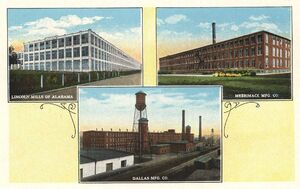
Lincoln Mills, Dallas Mfg. Co., Merrimack Mfg. Co.
Postcard type illustration depicting Lincoln Mills of Alabama, Merrimack Mfg. Co., and Dallas Mfg. Co. -
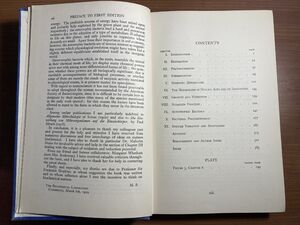
Topics in Marjory Stephenson's Bacterial Metabolism Monograph, Third Edition
Marjory Stephenson's Bacterial Metabolism is a collection of the most important techniques, studies, and information regarding the fields of chemical microbiology and bacterial biochemistry, citing numerous scientists and scientific papers, several of them her own. This photo contains its table of contents and the last few paragraphs of her own introduction to this monograph. -
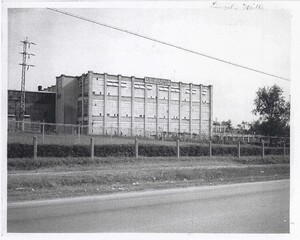
-
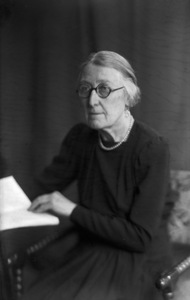
Official Portrait of Marjory Stephenson, 1940
This photo of Marjory Stephenson, taken by Walter Stoneman in 1940, is housed at the National Portrait Gallery in London, UK. It is one of the few photos that exist of her. -
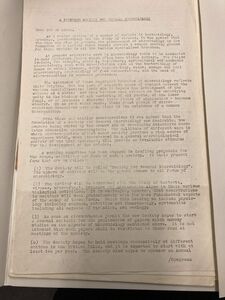
A Proposed Society for General Microbiology
This document details the proposal for the Society of General Microbiology to be established, including why such a society needs to be created, how the society is to be named and operated, the expected rules and guidelines the society aims to follow, and a list of people that are involved, later known as the Society's Original Members and Inaugural Committee. -

Society for General Microbiology List of Original Members (1944)
This document contains a list of the original members of Europe's first and largest microbiology society, the Society of General Microbiology. Founded in 1944 by Marjory Stephenson and Sir Alexander Fleming, it allowed scientists a chance to collaborate and build a community together in the newly emerging fields of bacterial biochemistry and general microbiology. -

Group for Research in Chemical Microbiology for Cambridge University, 1947-1948.
This document was viewed and photographed at the National Archives in Kew, UK. It's purpose serves as a review of chemical microbiology research occurring at the University of Cambridge as well as the list of people involved in said research from the years 1947-1948, though some of the individuals listed have moved onto other labs at the time of publication. -
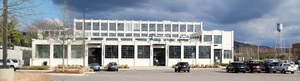
Lincoln Mill, 2025-03-16
Lincoln Mill has transitioned from a textile mill to a military complex and now serves as a vibrant cultural and commercial space. -
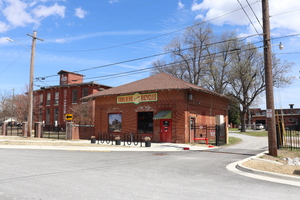
Paymaster's Office With Lowe Mill in the Background
This is the current view of the historic Paymaster's Office, featuring Lowe Mill Arts and Entertainment in the background. The office has currently been repurposed as a studio for the arts center and is functioning as a bike store. -
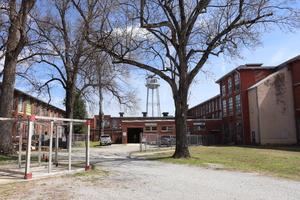
Current View Behind Paymaster's Office Toward Lowe Mill
A view of Lowe Mill behind the old paymaster's office and current studio, bike store. It features the water tower in the background. -
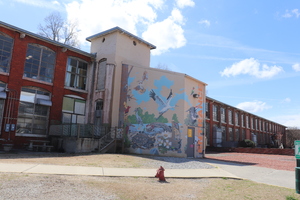
Lowe Mill Side
A side view of Lowe Mill from the parking lot. This shows the historic windows as well as the incorporation of modern art. -
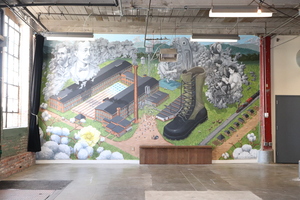
Lowe Mill History Mural Inside
A mural inside of Lowe Mill depicting Lowe Mill's history as a textile mill and shoe factory. This mural was created by Logan Tanner. -
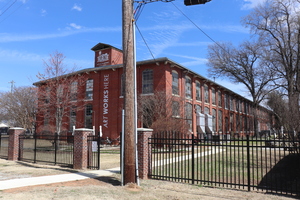
Entrance to Lowe Mill
A street view of Lowe Mill from the corner of Seminole and 9th Avenue. This is one of the many entrances to the modern Lowe Mill Arts and Entertainment Center. -
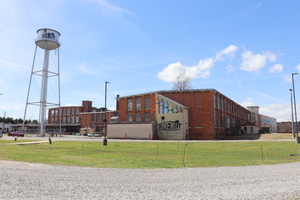
Lowe Mill with Water Tower
A view of Lowe Mill from the back parking lot. This photo features both the water tower and the loading dock. -
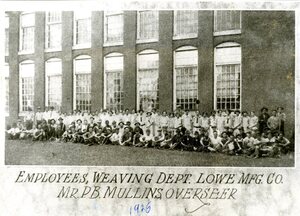
Lowe Mill Weaving Dept.
Lowe Mill featured a variety of departments in the 1920s and produced a variety of textiles. This photo, taken in 1925, highlights the Weaving department of the textile mill.