
Browse Items (8242 total)
Sort by:
-
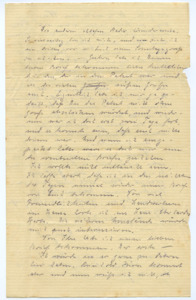
Letter from Hildegard Nörenberg to Hans Albert Silberberg (undated).
Hildegard Nörenberg (1904-1977) was a nurse and midwife from Berlin-Tegel, Berlin, Germany. She immigrated to Alabama in 1956, as her sister Maria, the wife of Operation Paperclip engineer Werner Kuers, had moved to Huntsville, Alabama in the early 1950s. From 1924 to 1932, Nörenberg frequently corresponded with Hans Albert Silberberg, her close friend and longtime love. Silberberg was a music student, composer, and pianist. He died in 1932, at the age of 25. -
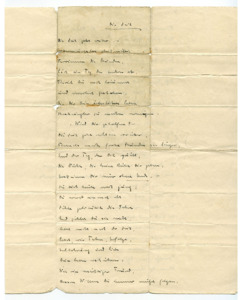
Letter from Hildegard Nörenberg to Hans Albert Silberberg (undated).
Hildegard Nörenberg (1904-1977) was a nurse and midwife from Berlin-Tegel, Berlin, Germany. She immigrated to Alabama in 1956, as her sister Maria, the wife of Operation Paperclip engineer Werner Kuers, had moved to Huntsville, Alabama in the early 1950s. From 1924 to 1932, Nörenberg frequently corresponded with Hans Albert Silberberg, her close friend and longtime love. Silberberg was a music student, composer, and pianist. He died in 1932, at the age of 25. -
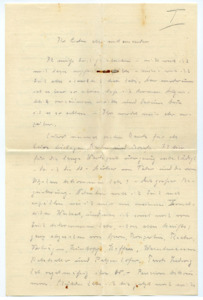
Letter from Hildegard Nörenberg to Hans Albert Silberberg (undated).
Hildegard Nörenberg (1904-1977) was a nurse and midwife from Berlin-Tegel, Berlin, Germany. She immigrated to Alabama in 1956, as her sister Maria, the wife of Operation Paperclip engineer Werner Kuers, had moved to Huntsville, Alabama in the early 1950s. From 1924 to 1932, Nörenberg frequently corresponded with Hans Albert Silberberg, her close friend and longtime love. Silberberg was a music student, composer, and pianist. He died in 1932, at the age of 25. -
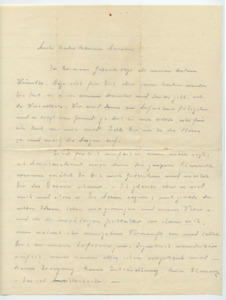
Letter from Hildegard Nörenberg to Hans Albert Silberberg (undated).
Hildegard Nörenberg (1904-1977) was a nurse and midwife from Berlin-Tegel, Berlin, Germany. She immigrated to Alabama in 1956, as her sister Maria, the wife of Operation Paperclip engineer Werner Kuers, had moved to Huntsville, Alabama in the early 1950s. From 1924 to 1932, Nörenberg frequently corresponded with Hans Albert Silberberg, her close friend and longtime love. Silberberg was a music student, composer, and pianist. He died in 1932, at the age of 25. -
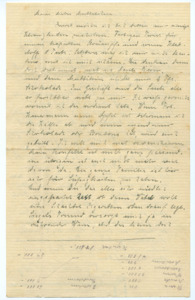
Letter from Hildegard Nörenberg to Hans Albert Silberberg (undated).
Hildegard Nörenberg (1904-1977) was a nurse and midwife from Berlin-Tegel, Berlin, Germany. She immigrated to Alabama in 1956, as her sister Maria, the wife of Operation Paperclip engineer Werner Kuers, had moved to Huntsville, Alabama in the early 1950s. From 1924 to 1932, Nörenberg frequently corresponded with Hans Albert Silberberg, her close friend and longtime love. Silberberg was a music student, composer, and pianist. He died in 1932, at the age of 25. -
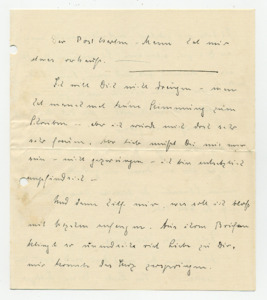
Letter from Hildegard Nörenberg to Hans Albert Silberberg (undated).
Hildegard Nörenberg (1904-1977) was a nurse and midwife from Berlin-Tegel, Berlin, Germany. She immigrated to Alabama in 1956, as her sister Maria, the wife of Operation Paperclip engineer Werner Kuers, had moved to Huntsville, Alabama in the early 1950s. From 1924 to 1932, Nörenberg frequently corresponded with Hans Albert Silberberg, her close friend and longtime love. Silberberg was a music student, composer, and pianist. He died in 1932, at the age of 25. -
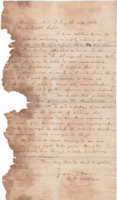
Letter from H. G. Wellborn to her uncle.
Wellborn writes to her uncle requesting information on the case of her "Pa", Abner Tate, who was arrested and tried for murder. She informs her uncle that there was a supposed detailed report in a Huntsville publication but couldn't get her hands on a copy. She concludes by writing of their temporary living arrangements just outside of Memphis, Tennessee. -
-
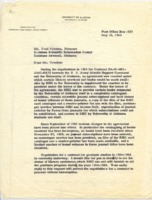
Letter from George W. Croker at the University of Alabama in Tuscaloosa, Alabama, to Fred Croxton, director of the Redstone Scientific Information Center in Huntsville, Alabama.
In the letter, Croxton discusses an agreement made between the University of Alabama and Redstone Scientific Information Center (RSIC) to share library services and materials, including journal subscriptions, messenger service, and access to the RSIC facility. -
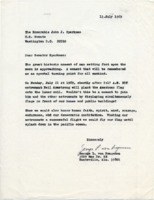
Letter from George L. von Pragenau in Huntsville, Alabama to Senator John J. Sparkman in Washington, D.C.
Von Pragenau suggests to Sparkman that residents of Huntsville should display American flags outside their homes and businesses at the same moment that "astronaut Neil Armstrong will plant the American flag onto the lunar soil." He wrote a similar letter to Huntsville mayor Joe Davis. -
-
-
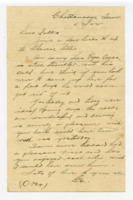
Letter from Ed addressed "Dear folks".
This letter is probably to Oscar Goldsmith and his wife, or whoever maintained correspondence with Ed while Oscar was sick. Ed expresses his apologies for Oscar's condition and states that it was "ideal Spring days" in Chattanooga. After closing the letter, Ed writes on the back: "Please pay the enclosed insurance premium also as I am afraid to pay it and run short of cash." -
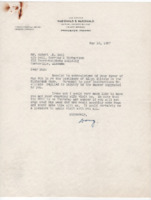
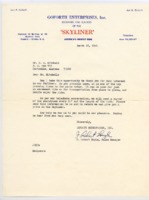
Letter from Douglas H. McDonald to Robert K. Bell.
In response to Bell's May 8th letter, McDonald informs Bell that Mr. Wiltsie will proceed as instructed regarding the reponse to the inquiry. He also expresses that he and his wife are excited to have Bell and his wife visit them. -
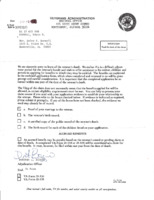
Letter from Dorothy L. Biggio to Mrs. Helen Burwell concerning the death of Edwin D. Burwell Jr.
The letter discusses the application for benefits due to Edwin D. Burwell Jr.'s death. -
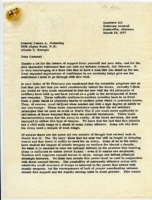
Letter from Col. John C. Nickerson at Redstone Arsenal in Huntsville, Alabama, to Gen. James A. Pickering in Atlanta, Georgia.
In this letter, Nickerson thanks Gen. Pickering for his support and explains why he believes the Army is the best service branch to develop ballistic missiles. He also discusses the need for missiles in case of war with the Soviet Union. Nickerson was a staff officer at the Army Ballistic Missile Agency at Redstone Arsenal assigned to work on the Jupiter, the United States' first mid-range ballistic missile. He was arrested and court martialed for espionage in 1957 after releasing sensitive documents about the United States missile program to the press. At the time, Secretary of Defense Charles E. Wilson granted the Air Force sole authority to develop intermediate range ballistic missile systems. Nickerson disagreed with this policy, and in response, leaked documents that demonstrated the superiority of Army missiles compared to those developed by the Air Force. He eventually pled guilty to lesser charges and was suspended from the Army for one year and was fined $1,500. Dr. Wernher von Braun was among those who testified on Nickerson's behalf. -
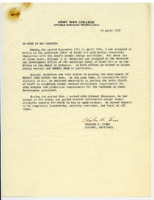
Letter from Col. Charles B. Hines.
This letter is written to testify of Colonel John C. Nickerson, Jr.'s character. Hines writes that Nickerson showed himself to be "completely trustworth, security conscious, and loyal at all times." -
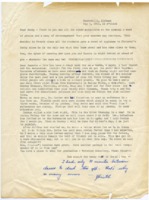
Letter from Christel Ludewig in Montevallo, Alabama to Hermann and Emmy Ludewig in Huntsville, Alabama.
In the letter, Christel congratulates her father on the success of Alan Shepard's flight as the first American in space and comments on aspects of her life as a college student. -
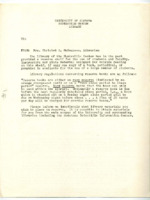
Letter from Christel L. McCanless concerning reserve books.
The letter concerns the use of a reserve shelf for students and faculty used to allow a particular item with few or no copies to be used by multiple individuals. The letter notes that this item cannot be taken from the reserve room. -
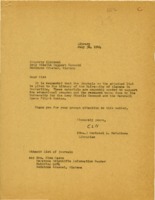
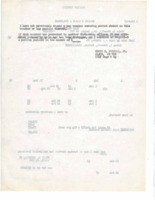
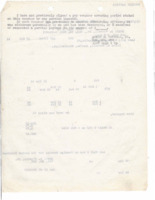
Letter from Christel L. McCanless at the UAH Library to the Army Missile Support Command at Redstone Arsenal in Huntsville, Alabama.
In the letter, McCanless requests the transfer of scientific and engineering journals from Redstone to support research and teaching at the University. A list of the journals is enclosed.