
Browse Items (8242 total)
Sort by:
-
Letter to the Commanding General, Third United States Army from the Defense Counsel.
This letter from the Defense Counsel requests a continuance of the trial of Colonel John C. Nickerson due to the counsel still waiting on a response to their request for top secret clearance for access to pertinent information for the trial and the delay of the release of the pre-trial investigation to the civilian defense counsel. A letter from John Nickerson follows, detailing how without top secret clearance, he is unable to provide his civilian counsel with "essential components of the real issues in my defense without divulging information that is now classified." Multiple copies are included. -
Letter to Douglas H. McDonald from Robert K. Bell.
Bell responds to McDonald's letter from April 30, 1957. He discusses the Nickerson case and the recent call for witnesses by the trial counsel. He also discusses old aquaintances on a personal level and mentions his upcoming trip to Indianapolis, hoping to have lunch with McDonald while there. -
Letter to Ray H. Jenkins from Robert K. Bell.
After receiving a continuance in the Nickerson case, Bell writes to Jenkins about making new plans. He states that they are going to try to get any political assistance that they can and that he will be writing to a number of friends in Washington regarding the case. -
Letter and draft of letter to Crump Garvin and C. F. Cordes from Robert K. Bell.
In this letter, Bell explains that the defense counsel still has not received approval for top secret security clearance, necessary to "properly defend the accused." Bell states that while the defense counsel would prefer not to request a delay of the proceedings, if the clearance is not granted, they may have no choice but to do so. The documents also include the original draft of the letter. -
Letter to Walter Emmett Perry from Robert K. Bell.
The defense counsel believes that the Commanding General or Convening Authority is both the accuser and the reviewer in the proceeding. Bell asks Perry in this letter for any "citations" on that particular point. -
Letter to the Commanding General, Third United States Army, from the defense counsel.
The Defense Counsel writes to the Commanding General, Third United States Army, requesting a continuance of trial of Colonel John C. Nickerson, Jr., citing the failure of the government to approve their request for top secret clearance as the reason. The defense counsel details how the clearance is vital to Nickerson's defense. -
Argument of Robert K. Bell before the General Court-Martial in the case of United States v. Colonel John C. Nickerson, Jr.
Argument of Robert K. Bell before the General Court-Martial at Redstone Arsenal in defense of Colonel John C. Nickerson, Jr. Nickerson plead guilty and Bell's testimony was present in an effort to "extenuate or mitigate whatever he might have done." Bell calls Nickerson's judgment "bad" and his actions "unfortunate" and "careless" but argues that he is not disloyal, disobedient, or promoting his own welfare above that of the Army or national security. -
Correspondence between T. C. King and Robert K. Bell and various attached letters.
T. C. King writes to the Secretary of Defense, Neil H. McElroy, regarding the Nickerson case, calling it the "second Billy Mitchell case". He encourages McElroy to restore Nickerson to active duty, return to Redstone Arsenal, promote Nickerson and remove Medaris. The Adjutant General , Herbert Jones, replies that promotions are based on the officers' entire records and Nickerson plead guilty. King's reponse is included. This exchange of letters was forwarded to Robert K. Bell in the interest of the case. -
Letter to the Commanding General, Third United States Army, from the Defense Counsel.
This letter is the first request of a continuance of the trial of Colonel John C. Nickerson, Jr. by the defense counsel due to waiting on top secret clearance for information pertinent to the case and other various reasons. -
Correspondence between Robert K. Bell and James L. Lawson.
Lawson writes a brief letter to Bell wishing him luck in the Nickerson case and saying he is the right person for the job. Bell responds calls the case a "Herculean one" and hopes he can fulfill the responsibility. -
Correspondence between Robert K. Bell and Carl C. Brown.
Brown wishes Bell the best in the Nickerson case and expresses support for the Colonel. Bell's response thanks Brown for his support. -
Letter to Ed Willis, Jr. from Robert K. Bell.
Bell writes to thank Willis for his support in the Nickerson case. -
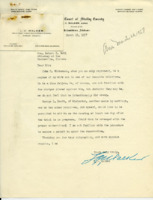
Correspondence between Robert K. Bell and Judge L. C. Walker.
L. C. Walker, Nickerson's uncle by marriage, asks Bell if he and another uncle by marriage could be permitted to sit in on the hearing. Bell responds that they will have seating space for Walker and Mr. Scott. -
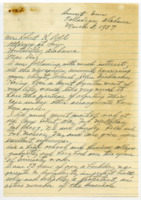
Correspondence between Robert K. Bell and R. H. Cox.
Cox writes to Bell asking if he could have the priviledge of reporting Nickerson's case, "unless other arrangements have been made." Cox includes his previous experience with court-martials. Bell responds by explaining that the defense counsel has little influence in the matters of appointing a court reporter. -
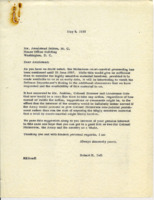
Letter to Armistead Selden from Robert K. Bell.
Bell writes to Selden in Washington D.C. on behalf of the defense counsel in an attempt to change Nickerson's case from trial by court-martial to a non-judicial punishment. Selden replies stating he will pass the information "if the opportunity present[s] itself." -
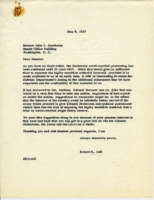
Correspondence between John J. Sparkman and Robert K. Bell.
Bell writes to Sparkman in Washinton D.C. on behalf of the defense counsel in an attempt to change Nickerson's case from trial by court-martial to a non-judicial punishment. Sparkman thanks Bell for his letter from May 8 and responds that he has already been "dropping some suggestions" regarding Bell's hope to give Nickerson a non-judicial punishment rather than trial by court-martial. -
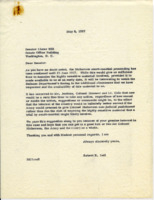
Correspondence between Senator Lister Hill and Robert K. Bell.
Bell writes to Hill in Washington D.C. on behalf of the defense counsel in an attempt to change Nickerson's case from trial by court-martial to a non-judicial punishment. Hill responds by thanking Bell for the letter and will do anything to help "along the lines of your suggestion." -
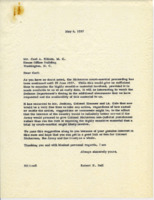
Letter to Carl A. Elliott from Robert K. Bell with a reply from secretary Cora B. Marlowe.
Bell writes to Elliott in Washington D.C. on behalf of the defense counsel in an attempt to change Nickerson's case from trial by court-martial to a non-judicial punishment. Marlowe writes to Bell on behalf of Congressman Elliott who is out of town and will respond to Bell's May 8 letter upon his return. -
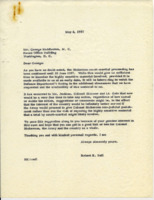
Correspondence between George Huddleston and Robert K. Bell.
Bell writes to Huddleston in Washington D.C. on behalf of the defense counsel in an attempt to change Nickerson's case from trial by court-martial to a non-judicial punishment. Huddleston responds stating his will "make a discreet request" to Secretary Brucker and General Maxwell. -
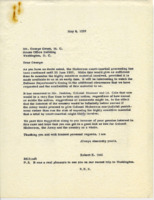
Correspondence between George Grant and Robert K. Bell.
Bell writes to Grant in Washington D.C. on behalf of the defense counsel in an attempt to change Nickerson's case from trial by court-martial to a non-judicial punishment. Grant responds with interest and states that it looks as though the Army may "drop the Colonel Nickerson case by non-judicial punishment."