
Browse Items (8242 total)
Sort by:
-
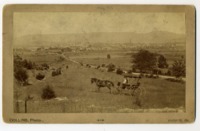
"The Valley of Huntsville."
The view shows Athens Pike (now Holmes Avenue) in Huntsville, Alabama, with Monte Sano Mountain in the background. -
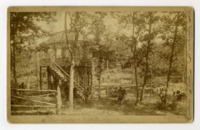
"Lilly Lake -- Monte Sano."
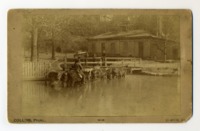
This photo shows a scene at Lily Lake on the grounds of Col. James O'Shaughnessy's home on Monte Sano. According to the Historic Huntsville Quarterly, the structure in the foreground of the photo is a "four-tiered vertical framework covered with ivy, and reaching an impressive height of twelve feet or so." -
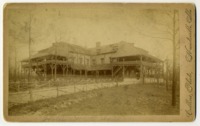
"Hotel Monte Sano."
The hotel opened on June 1, 1887 as a luxury health resort. It was built by the North Alabama Improvement Company with funding from Michael and James O'Shaughnessy. The hotel closed in 1900 and was demolished in 1944. -
-
-
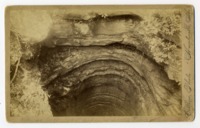
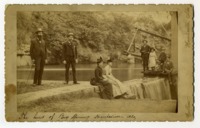
"Natural Wells. 350 ft drop in solid rock -- Monte Sano."
The well is a large limestone cave shaft located near the site of the Hotel Monte Sano. -
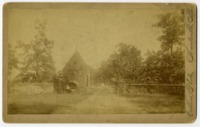
"Entrance to O'Shaughnessy Place -- Monte Sano."
The O'Shaughnessy Place, nicknamed "Castle Delight," was built in 1885 by Col. James and Lucy O'Shaughnessy. It was a two-story Queen Anne-style house with four chimneys, gas lights, water lines, and indoor plumbing. Col. O'Shaughnessy was a cotton and real estate broker, seaport and railroad developer, and co-owner of the Huntsville Hotel, Huntsville Opera House, Hotel Monte Sano, and the Monte Sano Railway and Turnpike. The house burned in March 1890 and was demolished in the 1920s. -
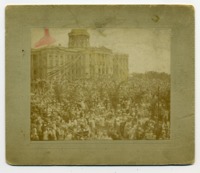
Crowd gathered at the capitol building in Denver, Colorado.
A handwritten inscription on the back of the photo notes, "The day 'our soldiers' came home, in front of capital. Sept. '99." -
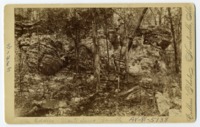
"The Eddies -- Monte Sano Ramble."
The photo depicts a man sitting on the rocks amidst the trees. The back of the photo reads, " 'The Eddies' or Eddy Rocks of Monte Sano." -
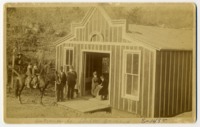
"Entrance to Shelta Caverns."
The photo shows the owner, Henry Fuller, with his family outside the cave entrance. Fuller purchased the cave in 1888 and developed it into an underground dance hall and bar. The cave is near current-day Pulaski Pike in Huntsville. -
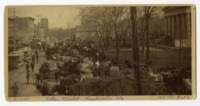
"Cotton Market, Huntsville, Ala."
The photo shows the north side of courthouse square looking east in downtown Huntsville. The Madison County Courthouse can be seen at the right of the photo. -
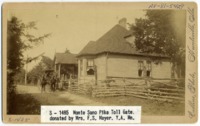
-
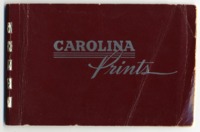
Photo album of downtown Huntsville from the city's sesquicentennial celebration.
The photos show scenes from the sesquicentennial festivities in and around the square, including people dressed in early nineteenth century attire, storefronts, and street decorations. -
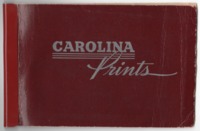
Photo album of downtown Huntsville from the city's sesquicentennial celebration.
The album includes photos of the Confederate monument and banners and decorations on the street. -
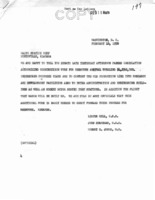
Letter from Sen. Lister Hill, Sen. John Sparkman, and Rep. Bob Jones to Huntsville radio stations.
Addressed to stations WBHP and WFUN, the letter announces that the U. S. Senate passed "legislation authorizing construction work for Redstone Arsenal totaling $4,250,000." The letter also mentions building rocket test stations and a flight test range. -
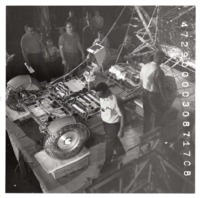
The lunar roving vehicle (LRV) during its construction.
Developed by Marshall Space Flight Center and built by Boeing, the LRV was an electric vehicle used to explore the Moon's surface during the Apollo 15, 16, and 17 missions. -
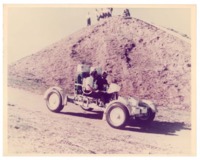
Two astronauts driving a test model of the lunar roving vehicle (LRV).
Developed by Marshall Space Flight Center and built by Boeing, the LRV was an electric vehicle used to explore the Moon's surface during the Apollo 15, 16, and 17 missions. -
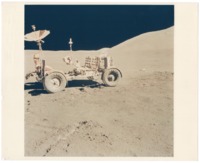
The lunar roving vehicle (LRV) on the Moon.
This photo shows the LRV on the moon at the Hadley-Appenine mountain range landing site during the Apollo 15 mission. Developed by Marshall Space Flight Center and built by Boeing, the LRV was an electric vehicle used to explore the Moon's surface during the Apollo 15, 16, and 17 missions. -
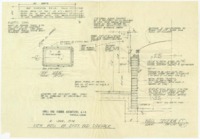
Drawings of a sidewalk well and rail on Courthouse Square in downtown Huntsville, Alabama.
The drawings include plans for a building a well in the sidewalk with a glass top for viewing the "old handmade brick walk" underneath the current sidewalk. In one of the notes, architect Harvie P. Jones notes that the historic sidewalk probably dates from the early to mid-nineteenth century "based on its depth of approximately 10" below the present walk." The well is located in front of 205 East Side Square. It was restored in 2018. -
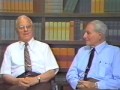
Helmut Zoike (Dr. Donald Tarter Video Interviews).
Interview conducted by Dr. Donald Tarter on January 1, 1987.Tags Oral History