
Browse Items (101 total)
Sort by:
-
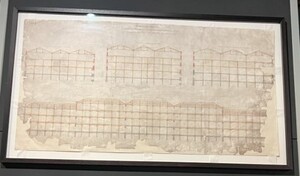
Internal Sections of Nos 1 and 9 Warehouses of Museum of London, Docklands
This helps us to examine what the building looked like before renovation when the Museum of London, Docklands was still a sugar mill in 1827.
-
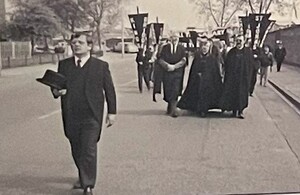
March Led by Peter Wade to the Island of Prince Charles
The march led by Peter Wade was meant to signify the “death of the community” with the development of the Docklands and reflects the feelings of the Community. This was done by the Association of Island Communities. -
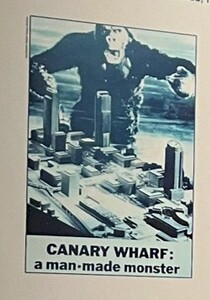
Political Cartoon Made Because of the Proposal to Turn Canary Warf into A Business District
Political Cartoon Made Because of the Proposal to Turn Canary Warf into A Business District Demonstrates the discourse in the community surrounding the new development -
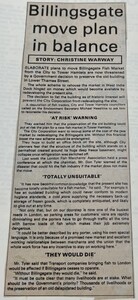
Hackney Advertiser Tower Hamlets
Hackney Advertiser Tower Hamlets: Describing how the development of the Docklands would put the citizens at risk as it is unsuitable. -
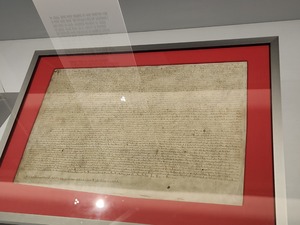
King John Magna Carta of 1215
There are many different versions of the Magna Carta. This is version is the first ever version, signed by King John in Runnymede in 1215. William Marshal had significant influence in the signing of this version. -
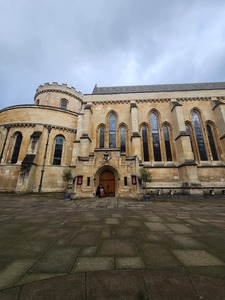
Temple Church in London
Temple Church was opened in 1185, and became the stronghold of the Knights Templar order in England. Today it serves as the final resting place for William Marshal alongside notable Templar leaders. Most of the building remains as it was in the 12th century with significant restoration taking place after "The Blitz" in World War II. -
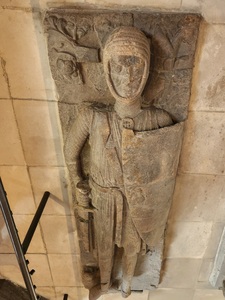
Effigy Tomb of William Marshal
William Marshal, first earl of Pembroke, died in 1219 as King regent. Subsequently, because of his commitment to the Templers cause in the Holy Land, and his loyalty to the English royal family, he was buried in Temple Church with great honor. His effigy tomb, despite being partially destroyed during "The Blitz," remains untouched in Temple Church. -
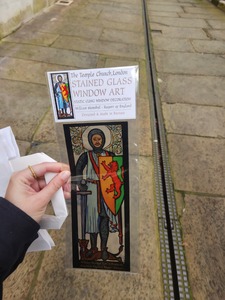
Window Cling Merchandise of William Marshal
William Marshal's legacy is greatly displayed and upheld in Temple Church. The Church often holds history events about William Marshal's life, has William Marshal exhibits, and sells William Marshal merchandise. This window cling is one of the many depictions in merchandise sold of Marshal in Temple Church. -
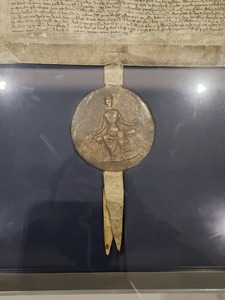
Official Seal of King John
Kings often replaced their signatures with their royal seals on official documents. This particular seal of King John was to certify The Articles of the Barons, the final settlement becoming The Magna Carta. -
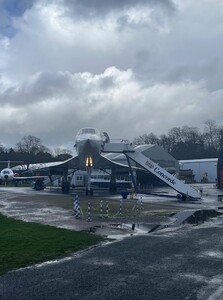
Concorde in Brooklands Museum from front
As the factory where 30% of each Concorde was made, Brooklands Museum now holds G-BBDG, one of the 18 remaining Concordes, for display. -
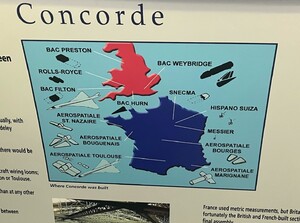
Graphic of Concorde construction locations
As a collaboration between Aérospatiale and the British Aircraft Corporation (BAC), parts of Concorde were constructed in various locations in Britain and France, as shown in this graphic. This graphic originates from Brooklands Museum, a major factory for Concorde. -
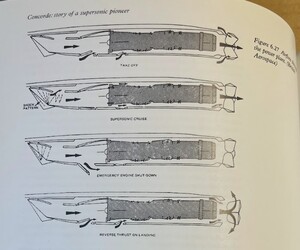
Airflow through the (Concorde) power plant
Demonstration of airflow throughout Concorde power plant in different stages of flight. As the Concorde's engine could only use air flowing at about 300 miles per hour at the fastest, the power plant includes adjustable ramps to slow down airflow from Concorde's top speed of ~1300 mph to a usable range. Also include reverse thrust demonstrations. -
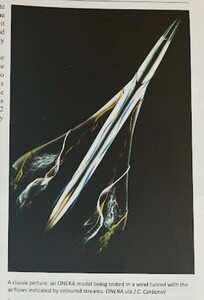
A classic picture: an ONERA model being tested in a wind tunnel with the airflows indicated by colored streams. (Concorde)
ONERA is a French aerospace research center, and this is a demonstration of the aerodynamics of Concorde via an ONERA model. In order to break the sound barrier, the fuselage was created to be needle-like, and the long wings were incredibly thin, making Concorde exceptionally aerodynamic. -
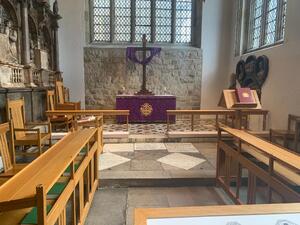
The Chapel of St Peter ad Vincula
A chapel within the Tower of London. This is where the most famous prisoners of the tower were buried after their executions. Katherine Howard was one of three queens buried here. -
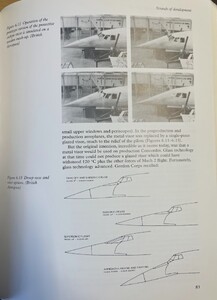
Concorde droop nose drawings and prototypes
Due to the nature of aerodynamic changes at supersonic speeds, Concorde's nose had to have a needle-like design to be aerodynamic enough to break the sound barrier. However, this design presented problems in visibility. This led to the iconic adjustable "droop nose" design, where the high-nose configuration was used when cruising for better aerodynamics, and the low-nose configuration was used during landing for better visibility. This source shows prototypes of the nose design and drawings of multiple nose configurations. -
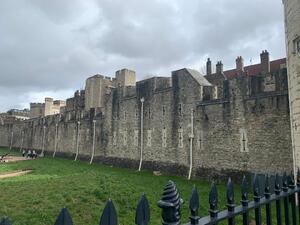
Tower of London
The Tower of London has served many purposes throughout its lifetime, from being a fortress, a prison, and even a zoo. During its prison phase, the Tower of London held many high-profile prisoners before they were eventually executed. Katherine Howard was one of three queens held and subsequently executed here. -
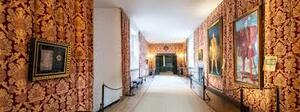
Hampton Court Palace Haunted Gallery
A gallery lined with 16th century paintings, including portraits of Tudor monarchs. Legend has it that when Queen Katherine Howard discovered she was being charged with adultery, she broke free from her guards stationed outside her room and ran along this route in the hope of finding King Henry in the Chapel to plead her innocence to. It is said that her ghost can still be seen running through this "Haunted Gallery," wailing for mercy. -
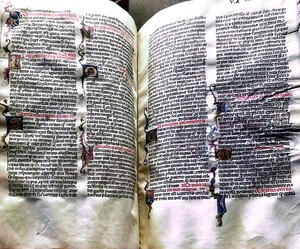
Open pages of Otia Imperialia codex
Random open pages of a 14th century Italian manuscript of the Otia Imperialia by Gervase of Tilbury. The margins are well decorated, and the text is handwritten in Latin. -
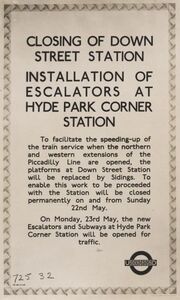
Closing of Down Street station
A magazine advertisement column is noting the closing of Down Street station -
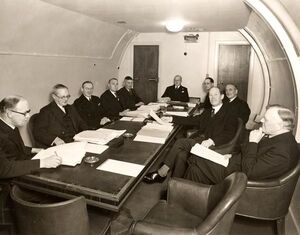
Meeting of the LT Executive in a room in the disused Down Street Underground station
Meeting of the LT Executive in a room in the disused Down Street Underground station. Frank Pick sits nearest to camera on right.