
Browse Items (102 total)
Sort by:
-
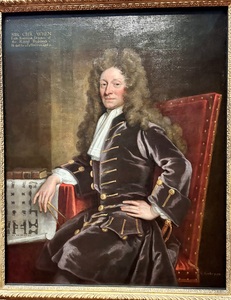
Portrait of Sir Christopher Wren.
At the National Portrait Gallery, there is a painting of Sir Christopher Wren. Wren was the King's Surveyor of Works following the Great Fire of 1666. He was heavily involved in the rebuilding of 51 parishes in London after the fire. -
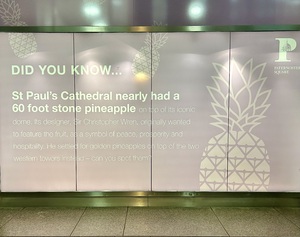
Information Board in London.
This information board exists around St. Paul's Cathedral. It discusses how Sir Christopher Wren, the architect of St. Paul's, wanted to feature a pineapple in the Cathedral because it is a symbol of peace, prosperity, and hospitality. It states that there are two golden pineapples on top of two of the western towers. -
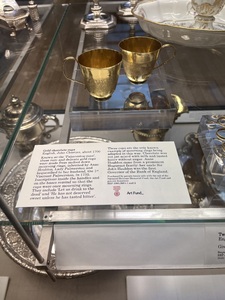
Photo of The Palmerstone Gold Chocolate Cups
This is a photo of The Palmertstone Gold Chocolate Cups. This photo was taken during the UAH Study Abroad to London. These cups are located at the British Museum. These cups were created by John Cartier in 1700. -
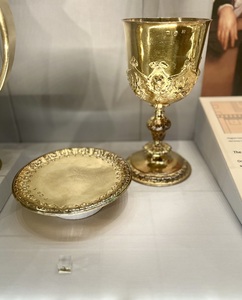
Paten and Chalice.
This paten and chalice were created for St. James Picadilly in 1683. It was designed to complement Sir Christopher Wren's, the architect of the church, rich interior. -
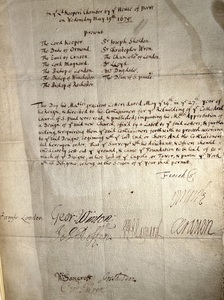
Legal document on the rebuilding of St. Paul's Cathedral.
After the Great Fire of 1666, St Paul's Cathedral needed to be rebuilt after being destroyed. This document marks the beginning of the rebuilding with the laying of the foundation. The document is signed by many notable people of the time, including Sir Christopher Wren who was tasked with the rebuilding of 51 city churches after the Great Fire. -
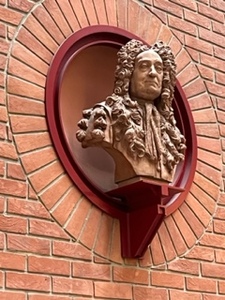
Bust of Sir Hans Sloane in the British Library
This is a photo of the Bust of Sir Hans Sloane in the British Library. This is a replica of Sir Sloane's bust in the British Museum by Rysbrack. This bust is in the library because of Sir Sloane's contributions to the library. -
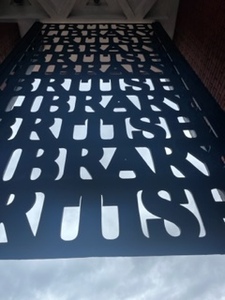
Entrance to the British Library
This is the entrance to the British Library. It says British Library over and over. The British Libary was founded partially by Sir Sloane's collection. -
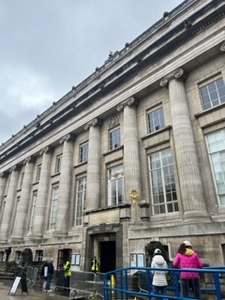
Alternate Entrance to The British Museum
This is a side entrance to the British Museum. The bust of Sir Hans Sloane and the Palmerstone Gold Cups are located here. This museum houses much of Sir Sloane's collections. -
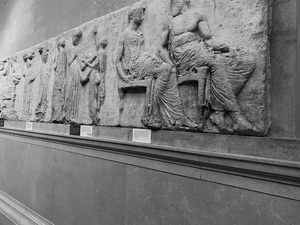
Frieze from the Parthenon
The British Museum currently has 247 feet (75 m.) of the original Parthenon frieze within their permanent collection. The frieze was the sculpted high-relief, which adorned the upper part, or naos of the Parthenon. In the exhibit space, each section of the frieze has a placard, which describes the scene depicted on the section of frieze as well as the cardinal direction and number in the frieze series. The marble frieze, which dates c. 438- 432 BC, depicts a Panathenaic procession. -
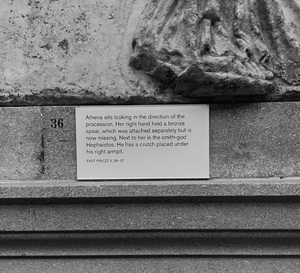
East Frieze V, 36- 37 Museum Label
In the exhibit space, each section of the frieze has a placard, which describes the scene depicted on the section of frieze as well as the cardinal direction and number in the frieze series. The marble frieze, which dates c. 438- 432 BC, depicts a Panathenaic procession. The label for the east frieze V, 36- 37 reads as follows: "Athena sits looking in the direction of the procession. Her right hand held a bronze spear, which was attached separately but is not missing. Next to her is the smith-god Hephaistos. He has a crutch places under his right armpit." -
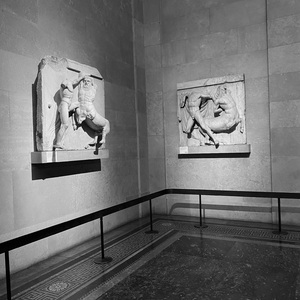
Metopes from the Parthenon
The British Museum currently has fifteen of the ninety-two the original Parthenon metopes within their permanent collection. The metopes, which decorated the exterior of the temple, just above the exterior colonnade depicted a mythological battle between the Lapiths and the centaurs. Many of the metopes are missing hands, feet, knees, arms, and legs. -
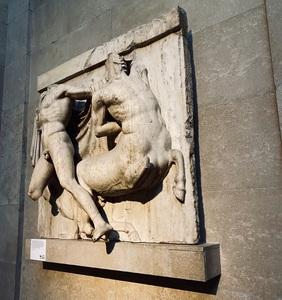
Parthenon Metope Detail
This metope, one of fifteen in the British Museum's permanent collection depicts chaos erupting between a Lapith and a centaur. The metope is severely damaged, with the Lapith missing both his head and his right leg, below the knee. The centaur is missing both his head, as well as his front right leg. -
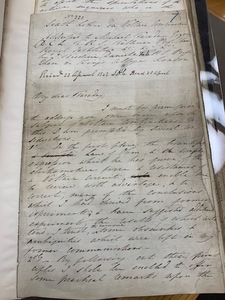
Picture of "The sixth letter from John Frederic Daniell to Michael Faraday" on the constant battery (first page)
This picture is the first page of the sixth letter to Michael Faraday from John Frederic Daniell. The first page goes over greetings and summarizes the past letters contents and how that relates to what he will talk about now. The rest of the paper goes on to make progress of applying ohm's law to the Daniell Cell or constant battery. -
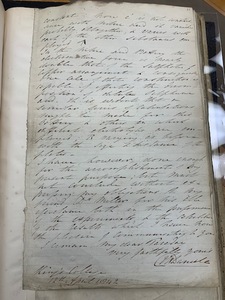
Picture of "The sixth letter from John Frederic Daniell to Michael Faraday" on the constant battery (last page)
This picture is the last page of the sixth letter to Michael Faraday from John Frederic Daniell. The first page goes over summarizes the content of the letter, asks further questions, and gives good tidings. The content being on the progress of applying ohm's law to the Daniell Cell or constant battery. -
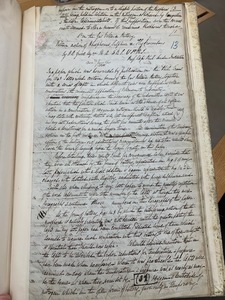
A picture of the unpublished manuscript, "On the gas voltaic battery. Voltaic action of phosphorus, sulphur, and hydrocarbons" (first page)
This resource was created by William Robert Grove in 1845. The paper goes over the various experiments of variations of the gas battery that grove made in 1842. The paper finds that non-conducting metals can be used to create electricity. -
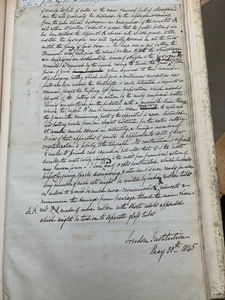
A picture of the unpublished manuscript, "On the gas voltaic battery. Voltaic action of phosphorus, sulphur, and hydrocarbons" (last page)
This resource was created by William Robert Grove in 1845. The paper goes over the various experiments of variations of the gas battery that grove made in 1842. The paper finds that non-conducting metals can be used to create electricity. -
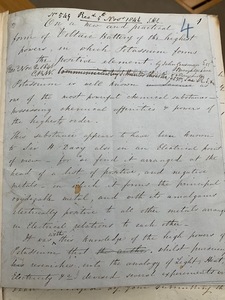
A picture of the unpublished manuscript “On a new and practical form of voltaic battery of the highest powers, in which potassium forms the positive element” (first page)
This manuscript was created by John Goodman in 1846-7. The paper goes over the creation of potassium in a unique battery arrangement consisting of sulfuric acid, platinum, crude oil, potassium, and copper wire. The author finds that the battery is able to produce current but is unable to get rid of the batteries instability. -
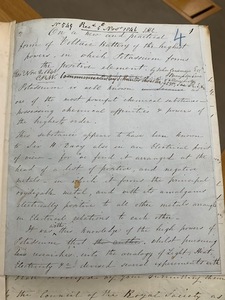
A picture of the unpublished manuscript “On a new and practical form of voltaic battery of the highest powers, in which potassium forms the positive element” (last page)
This manuscript was created by John Goodman in 1846-7. The paper goes over the creation of potassium in a unique battery arrangement consisting of sulfuric acid, platinum, crude oil, potassium, and copper wire. The author finds that the battery is able to produce current but is unable to get rid of the batteries instability. -
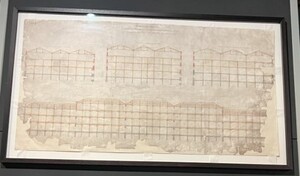
Internal Sections of Nos 1 and 9 Warehouses of Museum of London, Docklands
This helps us to examine what the building looked like before renovation when the Museum of London, Docklands was still a sugar mill in 1827.
-
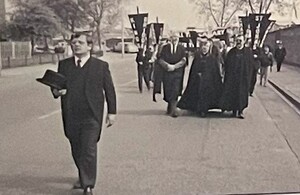
March Led by Peter Wade to the Island of Prince Charles
The march led by Peter Wade was meant to signify the “death of the community” with the development of the Docklands and reflects the feelings of the Community. This was done by the Association of Island Communities.