
Browse Items (8242 total)
Sort by:
-
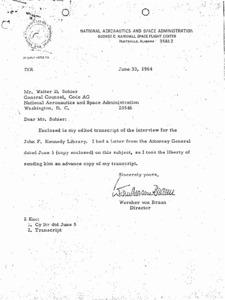
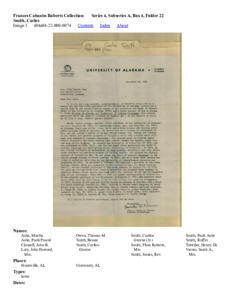
"Letter to Mr. Walter D. Sohier."
This letter was attached to the edited transcript of the interview for the John F. Kennedy Library.; Archive copy is a photocopy. -
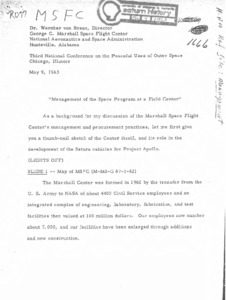
"Management of the Space Program at a Field Center."
Transcription of a presentation from Wernher von Braun discussing the roles of the space vehicles in the Apollo project. -
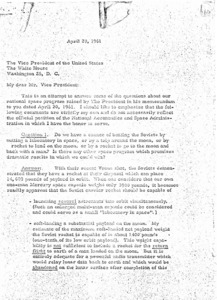
"Letter to the Vice President of the United States and White House."
This is an attempt to answer some of the questions about our national space program raised by The President in his memorandum to you dated April 20, 1961. I should like to emphasize that the following comments are strictly my own and do not necessarily reflect the official position of the National Aeronautics and Space Administration in which I have the honor to serve. -
"Meeting with Huntsville community leaders, Morris Auditorium."
Transcription of a conversation with Wernher von Braun. -
"Firing of Explorer I."
This speech was given by Wernher von Braun, then the director of the Development Operations Division at the Army Ballistic Missile Agency, at the 1958 ASME-ARS Aviation Conference in Dallas, Texas. -
Transcript of a speech given by Wernher von Braun to the Alabama Legislature.
Von Braun, then the director of Marshall Space Flight Center in Huntsville, Alabama, delivered this speech to the legislature in 1961. In the speech, he emphasizes that Alabama must take advantage of its position in the aerospace industry and create a robust "academic and research environment" in Huntsville to attract businesses that "will give birth to major new industries throughout the state." He exhorts the legislature to fund the newly established University of Alabama Research Institute (now part of the University of Alabama in Huntsville), arguing that "the Institute will not only be self-sustaining, but will enrich the State both financially and culturally." The legislature later approved von Braun's request of $3 million for the Research Institute, enabling the purchase of 200 acres of land for the campus and the construction of the Institute in 1964. The speech includes copies of slides von Braun used during his presentation, including diagrams of Saturn and Nova rockets as well as a mockup of a Saturn rocket on the lawn of the state capitol in Montgomery. -
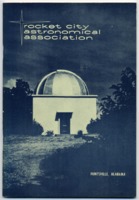
"Rocket City Astronomical Association."
The pamphlet includes a reprint of an article from RCAA publication Space Journal, a history of the organization with photos, and membership information. -
Letter to Mr. David L. Christensen.
Letter from C.A. Perkins to David L. Christensen regarding a request for information regarding cryogenic pump and motor development -
"Letter to Mr. David Christensen."
Letter to David L. Christensen from Ralph I. Villers responding to a request from Christiansen. Enclosed is the material requested. -
"The uprated Saturn I - its growth potential & future role in space."
Remarks by Vaino J. Vehko, Director of Engineering, Chrysler Corporation Space Division at 30th Annual Meeting, Aviation/Space Writers Association, Las Vegas, Nevada -
"A 'Zero Stage' for the Saturn IB Launch Vehicle."
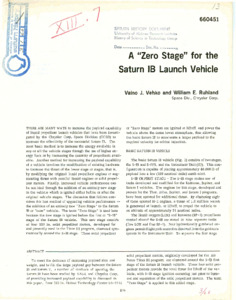
To meet the demands of increasing payload size and weight, and to fill the large payload gap between the Saturn IB and Saturn V, a number of methods of uprating the Saturn IB have been studied by NASA and Chrysler Corp. of providing increased payload capability is discussed in this paper. Four 120 in. United Technology Center UA-1205 solid propellant motors, originally developed for the Air Force Titan III program, are clustered around the S-IB first stage of the Saturn IB launch vehicle. These four solid propellant motors provide the total thrust for liftoff of the vehicle, with S-IB stage ignition occurring just prior to burn-out and separation of the solid propellant motors. The term "Zero Stage" is applied to this added stage. -
-
-
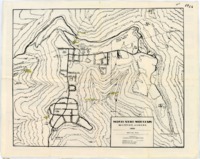
Topographical map of Monte Sano.
This map was drawn by William W. Varnedoe, Jr. and published by the Monte Sano Civic Association. It shows Monte Sano's neighborhoods, the state park, and the mountain's natural features, including springs and caves. The map also notes changes in elevation. -
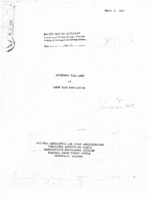
"Alignment Tool Aids in Large Tank Fabrication."
Includes the clipping "Clamping Tool Aligns Odd-Shaped Sections for Welding" from <i>Design News</i>, September 4, 1963, written by Margaret A. Maas. -

Photo of the Serpentine in Hyde Park, London, England
Photo of the Serpentine Lake in Hyde Park, London England. -
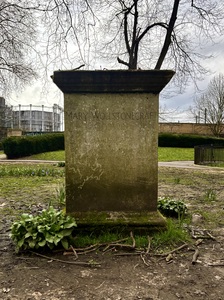
Tomb of Mary Wollstonecraft Godwin, William Godwin, and Mary Jane Godwin
Three sides of a grave stone for Mary Wollstonecraft Godwin, William Godwin, and Mary Jane Godwin. The inscriptions are faded, the faces of the grave stone worn. -
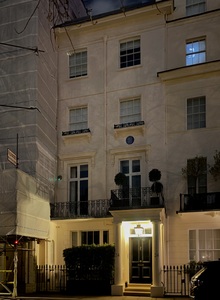
Home of Mary Shelley marked by blue plaque
Home of Mary Shelley marked by blue plaque in London, England. Plaque reads "MARY SHELLEY 1797-1851 Author of Frankenstein lived here 1846-1851." Photo taken by Sophia Vanderwaal. -
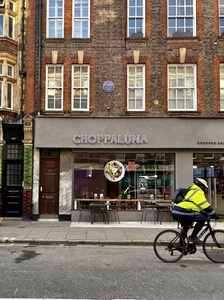
Home of Percy Shelley and Mary Shelley marked by blue plaque
Home of Percy Shelley and Mary Shelley marked by a blue plaque in London, England. Plaque reads "Percy / Bysshe Shelley / 1792-1822 / Poet & Radical Thinker / & / Mary Shelley / 1797-1851 / Author of Frankenstein / lived in a house / on this site / 1815-1816." Photo taken by Sophia Vanderwaal -
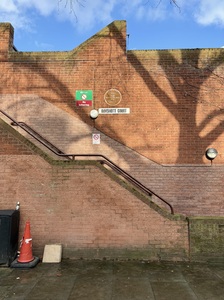
Home of Mary Wollstonecraft marked by brown plaque
Home of Mary Wollstonecraft marked by brown plaque in Oakshott Court. Plaque reads "In a house on this site lived Mary Wollstonecraft, author of "A Vindication of the Rights of Woman", 1759 - 1797. Camden London Borough Council." This is the location where Mary Shelley was born and Mary Wollstonecraft died.