
Browse Items (215 total)
Sort by:
-
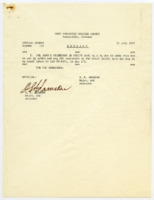
Special Orders Number 135.
This is an extract from Special Orders Number 135 regarding Colonel John C. Nickerson, Jr. -
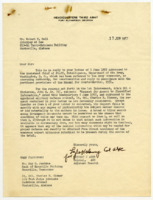
Letter to Robert K. Bell from Col. Forrest J. Agee.
Agee writes this letter in response to Bell's June 3, 1957 letter to the Assistant Chief of Staff, Intelligence, regarding request for access to classified information. He states that the request is "not favorable considered" and the necessary information could "readily be obtained from direct testimony." -
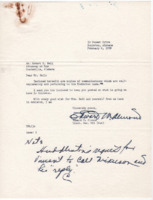
Correspondence between Robert K. Bell and Edward M. Almond.
These letters include information pertaining to the Nickerson case. Almond expresses desire to "get something in motion to subdue the unnecessary and trivial expressions of � General Medaris". The letters also mention various correspondence that was included in the exchange of information. Both men advocate for the "cause" of Colonel Nickerson's actions. Bell was Nickerson's attorney during his trial. -
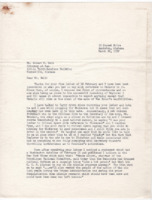
Letter to Robert K. Bell from Edward M. Almond.
Almond writes in reponse to Bell's February 18 letter regarding Medaris and other information of the Nickerson case. -
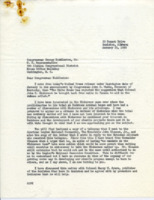
Correspondence between George Huddleston, Jr., Lieutenant General Edward M. Almond, and Carl Vinson.
Almond writes to Huddleston in an attempt to get Nickerson brought back from exile in Panama. Huddleston agrees with Almond in his response and says he will do his best to advocate for Nickerson's testimony on the missile program and will bring the matter to the attention of the Chairman, Honorable Carl Vinson. Huddleston's following letter of January 25, 1958 states that Carl Vinson does not believe having Nickerson as a witness is advisable. Huddlestone attaches a copy of Vinson's letter that explains this. Almond writes in response to the decision with his thoughts on the matter and believes that "all service officers will step gingerly in their testimony" so as not to "stick their necks out as General Gavin and Colonel Nickerson have already done." -
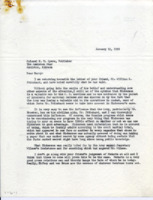
Letter to Harry M. Ayers from Edward M. Almond.
Almond writes to Ayers stating that he believes Nickerson is still a "valuable man to the U.S. services" and thanks Ayers for his interest in the matter. -
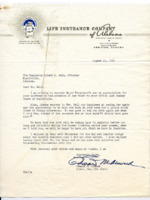
Letter to Robert K. Bell from Edward M. Almond.
This letter thanks Bell for the courtesy extended to Almond and Major Fergusson's visit to his office and expresses well wishes to Bell's wife. Almond details a few aspects of his stay in Huntsville in this letter. -
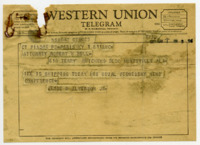
Telegram to Robert K. Bell from Jesse M. Alverson, Jr.
Alverson, publisher at The Paris Daily Enterprise, telegrams Bell about President Eisenhower. -
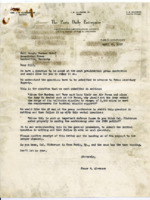
Correspondence between William J. Waugh and Jesse M. Alverson.
Alverson writes to Waugh to submit a question to the asked at the next presidential press conference along with a follow-up question. The question regards the President's opinion on the missile program and Colonel Nickerson's actions. Waugh responds that the Washington bureau will do what it can to get her questions answered. -
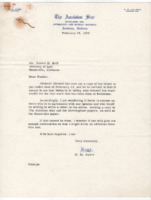
Correspondence between Robert K. Bell and Harry M. Ayers.
In response to Bell's February 13 letter from Edward Almond, Ayers informs Bell that he is attempting to find someone who would write a letter to newspaper publications in agreement with their opinion that Medaris is taking too much credit for his work. Bell responds that he is skeptical Ayers would find anyone as Medaris could make their life a "rather miserable existence". -
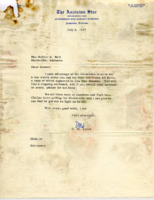
Letter to Robert K. Bell from Harry M. Ayers.
Ayers writes to Bell about an article written in The Anniston Star about him and the Nickerson trial and congratulates Bell for getting Nickerson "out as light as he did." -
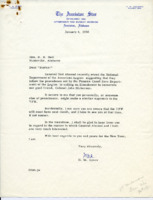
Letter to Robert K. Bell from Harry M. Ayers.
Ayers writes regarding a wire from General Edward Almond to the National Department of the American Legion "calling on Eisenhower to exonerate our good friend Colonel John Nickerson." -
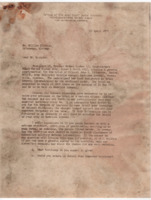
Letter to William Nichols from William G. Barry.
This letter requests William Nichols to be present at the trial as a defense witness and a written statement from Nichols to detail what his testimony would be. The letter includes questions for Nichols to answer in the written statement. -
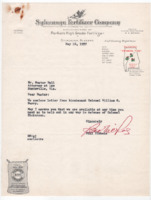
Correspondence from William Nichols to Robert K. Bell containing a letter from William G. Barry.
William Nichols writes to Robert K. Bell, enclosing a letter from Lieutenant Colonel William G. Barry. The enclosed letter requests William Nichols' presence at the Nickerson trial at an undetermined date. It states that a subpoena will be sent when a date is set. -
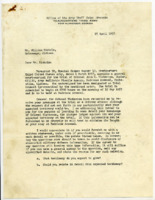
Letter to William Nichols from William G. Barry.
Letter requests William Nichols' presence at the trial of Colonel John C. Nickerson, Jr. It also includes questions Nichols is to answer in a written statement and an anticipated range of dates he will be expected to give his testimony in court. -
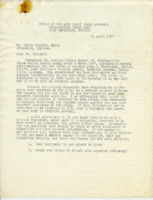
Letter to Mayor Ralph Wiltsie from William G. Barry.
Letter requests Ralph Wiltsie's presence at the trials of Colonel John C. Nickerson, Jr. It also includes questions Wiltsie is to answer in a written statement and an anticipated range of dates he will be expected to give his testimony in court. -
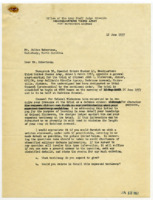
Letter to Julian Robertson from Lt. Col. William G. Barry.
This letter requests Robertson's presence at the Nickerson trial as a defense witness and a written statement in response to several questions listed in the letter. -
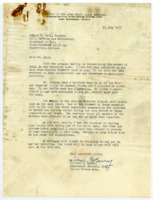
Letter to Robert K. Bell from Lt. Col. William G. Barry.
Barry writes to Bell to inform him that the Nickerson case has been transcribed and was forwarded to Washington the previous day. He expresses gratitude towards the manner in which Bell extended to him and hopes to renew their acquaintance in the future. -
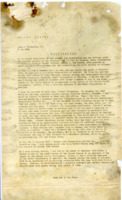
Stipulation of the testimony of John A. Baumann.
Written testimony of John A. Baumann, employee of the Radio Corporation of America, presented if he were "present in court". No signatures of the defense counsel, accused, or trial counsel are on the document. -
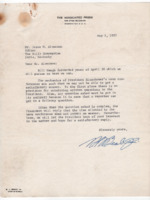
Letter to Jesse M. Alverson from W. L. Beale, Jr.
Beale writes to Alverson, the editor of The Daily Enterprise, regarding potential questions Alverson wants to ask President Eisenhower.