
Browse Items (215 total)
Sort by:
-
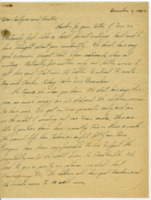
Handwritten letter to Robert K. Bell and his wife, Carolyn, from Colonel John C. Nickerson, Jr.
Nickerson writes in reponse to the Bells' letter of November 26. Nickerson writes from his new location in Panama after he was sent there following his court-martial. He details life there and various aspects of his positions. He expresses that he wishes the Bells would visit. In his postscript, Nickerson explains why he has not written for so long. -
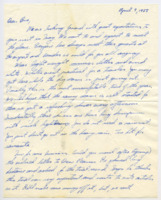
Letter to Robert K. Bell from Colonel John C. Nickerson, Jr.
Nickerson writes to Bell about Bell's upcoming trip to Panama in May, 1958. He offers advice for travelling to Panama and various things to expect. He also asks Bell to type the enclosed letter to journalist Drew Pearson, and he called Nickerson asking for the trial record. -
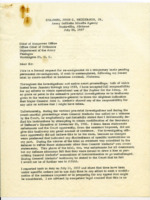
Letter to the Chief of Manpower Office from Colonel John C. Nickerson, Jr.
Nickerson writes to the Chief of Manpower requesting a re-assignment on a temporary basis following his recent trial by court-martial at Redstone Arsenal in Huntsville, Alabama. Nickerson reported back to duty on July 11, 1957 and writes that his newly assigned duties are "of relatively no importance to the Army of to ABMA." Nickerson requests a new assignment that allows him back at Redstone Arsenal. -
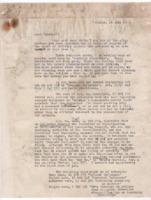
Letter to Robert "Buster" Bell from Walter Emmett Perry.
Perry responds to Bell's letter of June 10th regarding the possible accuser also being the reviewer in the Nickerson trial proceedings. -
Letter from James A. Pickering.
Pickering writes a general letter about Colonel John c. Nickerson, Jr.'s character, stating that Nickerson was a man of "sterling character" and an "intelligent and highly valuable officer." -
Stipulation of the testimony of Colonel William C. Pritchard
Written testimony of William C. Pritchard, Colonel with the Army Physical Evaluation Board at Walter Reed Hospital, as presented if he were "present in court". Page two missing. Handwritten note at the bottom says, "2d page only had signatures." -
Letter to Harry M. Ayers from William S. Pritchard.
Pritchard writes to Ayers in response to his January 4, 1958 letter regarding the reinstatement of Colonel John C. Nickerson, Jr. He details what he believes to be "the exact facts in the Nickerson case." He states that Nickerson was in violation of Army orders and therefore is not qualified to serve in a facility like Redstone Arsenal in Huntsville, Alabama. -
Letter and draft of letter to the Chief of Manpower Office from Patrick W. Richardson.
Richardson writes to the Chief of Manpower prior to Nickerson's letter to the Chief of Manpower of July 25. Richardson states that the orders that Nickerson is not to use duty time to modify the sentence imposed upon him or for appeal is inappropriate and "perhaps illegal". He also states that Nickerson's assignment to the ABMA is unfair and, like Nickerson, requests that he be re-assigned to Redstone Arsenal "until all legal proceedings in this case are complete." -
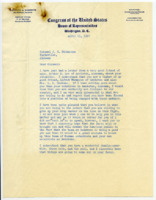
Letter to Colonel John C. Nickerson, Jr. from Kenneth A. Roberts.
Roberts writes to Nickerson about his case, expressing interest and stating that by knowing Nickerson's relatives, he is sure Nickerson is anything but disloyal. Roberts also writes that he will be in Huntsville sometime and hopes to arrange to talk with Nickerson. -
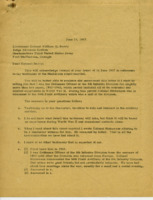
Letter to Lt. Col. William G. Barry from Julian Robertson.
In response to Colonel Barry's request for his testimony at the Nickerson court-martial, Robertson replies with his answers to the list of questions about Colonel Nickerson. -
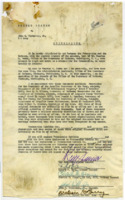
Stipulation of the testimony of Maurice W. Roche.
Written testimony of Maurice W. Roche, administrative assistant for the Office of the Secretary of Defense, as presented if he were "present in court". Signed by the defense counsel, the accused, and the trial counsel. -
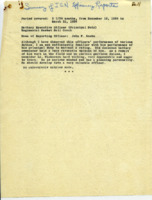
"Summary of JCN Efficiency Reports."
Written by John F. Roehm, this report covers a summary of reports of Colonel John C. Nickerson, Jr.'s efficiency from his former Battery Executive Officer and regimental basketball boach. -
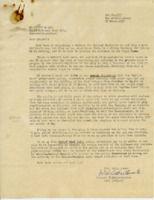
Letter to Robert K. Bell from Richard W. Satterthwaite.
Satterthwaite writes to Bell to aid him in the Nickerson case by providing suggestions for testimony and information regarding the information regarding the missile program, including its financial situation and impact if switched from the Army to the Air Force. -
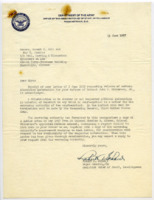
Letter to Robert K. Bell and Ray H. Jenkins from Major General Robert A. Schow, Assistant Chief of Staff, Intelligence.
Schow writes this letter in response to Bell and Jenkins request for classified information. Schow states that the convening authority will determine the relevance of the material before allowing access. -
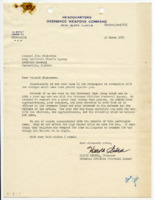
Letter to Colonel John C. Nickerson, Jr. from Harold Sedrel.
Sedrel writes on behalf of Nickerson's character, though "unacquainted with the details of this particular case." -
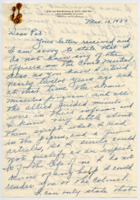
Letter from Michael G. Smith.
Smith writes to "Pat" with information as the former president of the court-martial, that would be beneficial to the defense counsel. "Pat" most likely is one of the members of the defense counsel as Smith refers to "you and Buster" several times throughout his letter, "Buster" being the nickname for Robert K. Bell, defense attorney. -
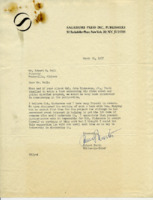
Letter to Robert K. Bell from Robert Smith.
Editor-in-Chief of Sagamore Press Inc., Publishers, Robert Smith, writes to Bell to say that his publishing company would be interested in Bell and Nickerson's story if they ever wish to write a book on it and the guided missles program. -
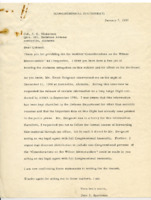
Letter to Colonel John C. Nickerson, Jr. from John J. Sparkman.
Sparkman thanks Nickerson for sending a booklet he had requested. He also requests Nickerson to send information on a long range flight conducted by ABMA directly to Erik Bergaust for an interview Bergaust did on Sparkman. -
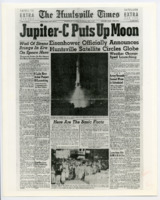
Front page of The Huntsville Times from February 1, 1958.
Topics included on the front page of this newspaper include the Jupiter missile developed by the German Rocket Team and the announcement that it had circled the globe, and other various space topics. -
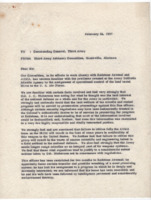
Letter to the Commanding General, Third Army, from the Third Army Advisory Committee.
This letter details the committee's agreement with Nickerson's actions, believing he was acting "for what he thought was the best interest of the national defense." They advocate for the inclusion of the Army Ballistic Missile Agency team on the intermediate-range ballistic missile program. The committee states that trial by court-martial would not reflect the many accomplishments Nickerson has made for the Army weapon program and feel it unnecessary.