
Browse Items (215 total)
Sort by:
-
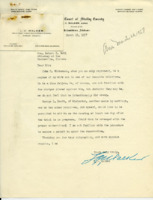
Correspondence between Robert K. Bell and Judge L. C. Walker.
L. C. Walker, Nickerson's uncle by marriage, asks Bell if he and another uncle by marriage could be permitted to sit in on the hearing. Bell responds that they will have seating space for Walker and Mr. Scott. -
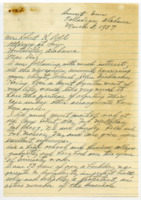
Correspondence between Robert K. Bell and R. H. Cox.
Cox writes to Bell asking if he could have the priviledge of reporting Nickerson's case, "unless other arrangements have been made." Cox includes his previous experience with court-martials. Bell responds by explaining that the defense counsel has little influence in the matters of appointing a court reporter. -
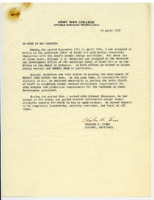
Letter from Col. Charles B. Hines.
This letter is written to testify of Colonel John C. Nickerson, Jr.'s character. Hines writes that Nickerson showed himself to be "completely trustworth, security conscious, and loyal at all times." -
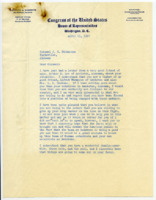
Letter to Colonel John C. Nickerson, Jr. from Kenneth A. Roberts.
Roberts writes to Nickerson about his case, expressing interest and stating that by knowing Nickerson's relatives, he is sure Nickerson is anything but disloyal. Roberts also writes that he will be in Huntsville sometime and hopes to arrange to talk with Nickerson. -
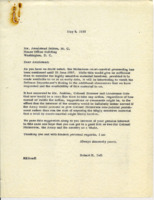
Letter to Armistead Selden from Robert K. Bell.
Bell writes to Selden in Washington D.C. on behalf of the defense counsel in an attempt to change Nickerson's case from trial by court-martial to a non-judicial punishment. Selden replies stating he will pass the information "if the opportunity present[s] itself." -
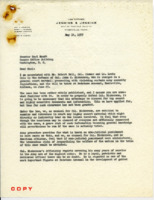
Letters to senators in Washington D.C. from Ray Jenkins.
Ray Jenkins sends the same letter to various senators in Washington D.C. in an effort to speed up the approval of top secret clearance for the defense counsel and advocate for non-judicial punishment for Colonel Nickerson rather than court-martial. He summarizes Nickerson's efficiency reports as well. Jenkins concludes by asking if the senator would convey the message and thinking of the defense counsel to the Secretary of Defense, Mr. Wilson. -
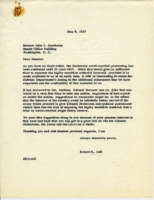
Correspondence between John J. Sparkman and Robert K. Bell.
Bell writes to Sparkman in Washinton D.C. on behalf of the defense counsel in an attempt to change Nickerson's case from trial by court-martial to a non-judicial punishment. Sparkman thanks Bell for his letter from May 8 and responds that he has already been "dropping some suggestions" regarding Bell's hope to give Nickerson a non-judicial punishment rather than trial by court-martial. -
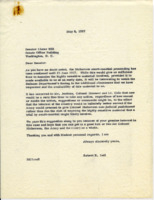
Correspondence between Senator Lister Hill and Robert K. Bell.
Bell writes to Hill in Washington D.C. on behalf of the defense counsel in an attempt to change Nickerson's case from trial by court-martial to a non-judicial punishment. Hill responds by thanking Bell for the letter and will do anything to help "along the lines of your suggestion." -
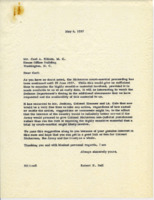
Letter to Carl A. Elliott from Robert K. Bell with a reply from secretary Cora B. Marlowe.
Bell writes to Elliott in Washington D.C. on behalf of the defense counsel in an attempt to change Nickerson's case from trial by court-martial to a non-judicial punishment. Marlowe writes to Bell on behalf of Congressman Elliott who is out of town and will respond to Bell's May 8 letter upon his return. -
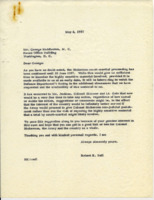
Correspondence between George Huddleston and Robert K. Bell.
Bell writes to Huddleston in Washington D.C. on behalf of the defense counsel in an attempt to change Nickerson's case from trial by court-martial to a non-judicial punishment. Huddleston responds stating his will "make a discreet request" to Secretary Brucker and General Maxwell. -
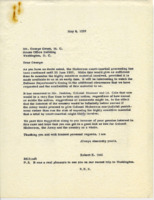
Correspondence between George Grant and Robert K. Bell.
Bell writes to Grant in Washington D.C. on behalf of the defense counsel in an attempt to change Nickerson's case from trial by court-martial to a non-judicial punishment. Grant responds with interest and states that it looks as though the Army may "drop the Colonel Nickerson case by non-judicial punishment." -
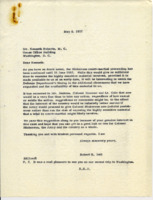
Correspondence between Kenneth Roberts and Robert K. Bell.
Bell writes to Roberts in Washington D.C. on behalf of the defense counsel in an attempt to change Nickerson's case from trial by court-martial to a non-judicial punishment. Roberts responds that he has done everything he could on the matter. -
Letter to Robert E. Jones from Robert K. Bell.
Bell writes to Bob Jones in Washington D.C. on behalf of the defense counsel in an attempt to change Nickerson's case from trial by court-martial to a non-judicial punishment. -
Letter to General Matthew B. Ridgeway from Ray H. Jenkins.
Jenkins writes to Ridgeway in response to his letter to Charles Zimmer that his testimony would not be relevant and admissible in the case of Colonel Nickerson. Jenkins details in his letter why Ridgeway should reconsider and awaits his reply with interest. -
Letter to Robert K. Bell from Joe L. Evins.
Evins writes to Bell of his interest in his involvement in the Nickerson case due to serving with both him and Ray H. Jenkins in the military. -
Handwritten letter to Robert K. Bell from J. B. Webster.
Webster writes to wish Bell and Nickerson good luck in the case and send copies of letters that may have information useful to the defense of Nickerson. -
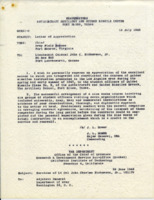
Various correspondence regarding Colonel John C. Nickerson, Jr.
This document contains various letters of appreciation received by Colonel Nickerson, efficiency reports, testimonies of Nickerson's character, certificates of achievement, and other services and recommendations pertaining to Nickerson. -
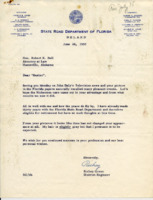
Correspondence between Richey Green and Robert K. Bell.
Green writes to Bell saying he saw him on the news following the Nickerson case and he hopes the results were to his satisfaction. Bell writes to Green in response saying he is pleased at the outcome of Nickerson's trial and asks Green to visit him if he is ever in North Alabama. -
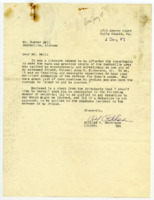
Correspondence between Robert K. Bell and Colonel William C. Pritchard.
Pritchard writes to Bell, sending a check for Colonel Nickerson to be used for any fines that would be imposed or for the expense of the defense of Nickerson. Bell responds with his sincere thanks and writes that he has given the check to Colonel Nickerson. -
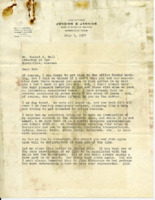
Letter to Robert K. Bell from Ray H. Jenkins.
Jenkins writes after the trial of Colonel Nickerson, stating that he is completely relaxed and trying to get back into office routine. He approximates the expenses in the Nickerson case and says that his fee would be satisfactory as the amount agreed upon by Nickerson and Bell. He concludes by stating that Nickerson came out of the trial "unscathed and unscarred" and sends his best to Bell and his wife. The Nickerson trial ended with the dropping of the Espionage Act and perjury charges in exchange for 15 minor counts of mishandling defense information. Nickerson was fined $1,500, reprimanded, and forbidden to exercise his command for a year. He was later sent to a military base in Panama and died in a car crash a few years later.