
Browse Items (215 total)
Sort by:
-
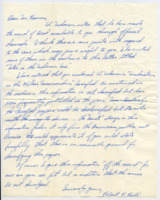
Letter to Drew Pearson from Robert K. Bell.
This handwritten letter to Drew Pearson from Robert K. Bell details Colonel Nickerson's dealings with Pearson and the "Considerations on the Wilson Memorandum" that contained classified information. -
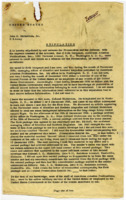
Stipulation of the testimony of Erik Bergaust.
Written testimony of Erik Bergaust, managing editor of Missiles and Rockets Magazine, as presented if he were "present in court". Signed by the defense counsel, the accused, and the trial counsel. -
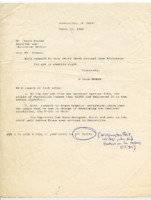
Various correspondence with David Bowman from 1989 to 1991.
These letters to David Bowman, reporter and editorial writer, all pertain to Bowman's story about Colonel John Nickerson. The first letter includes foot notes and states that he sent a copy of the story to a Washington Post writer. The second letter contains additional information relating to the missile program that may be helpful for the story and a diagram of the original prototype for the Explorer I earth satellite. This set of letters also includes the original letter from David Bowman to Brig. Gen. Harold W. Nelson in which Bowman states he finally photocopied the published transcripts of Colonel Nickerson's court martial. Nelson's reponse follows thanking Bowman for sending the series on Colonel Nickerson. The final letter from Colonel Thomas W. Sweeney includes a working bibliography on the Nickerson case and invites him to visit the Military History Institute. -
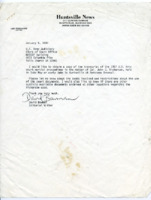
Correspondence between David Bowman and Mary B. Dennis.
Bowman writes to the U.S. Army Judiciary Clerk of Court Office to request a copy of the transcript of the Nickerson court martial proceedings. Mary B. Dennis, Deputy Clerk of Court responds that a large portion is classified and asks if he wants that material reviewed towards declassification though it would be a lengthy process. She also guides him towards other "publicably available documents" regarding the case. The following letters from Dennis regards the review of the classified transcripts of the Nickerson case and more details about the record of the trial. Bowman's second letter includes a check to pay for the transcripts and the review of the classified material. Dennis writes several more letters regarding more classified prosection exhibits and that Bowman's request to review the classified material has been denied. The final letter is the memo that states that the review has been denied from Deputy Director Robert J. Monahan. -
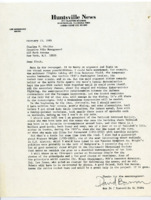
Letter to Charles F. Pfeifer from David Bowman.
Bowman writes to Pfeifer about a "two-pager" that he wrote, detailing its contents. He also includes several other of his resume highlights including four novels, playscripts, and other things he has written. Bowman also includes that he is the president of the Tallulah Bankhead Society, a society that honors and celebrates a 1930s actress from Alabama. Bowman is appealing to Pfeifer, a creative film manager, about his recent work on the Nickerson case. -
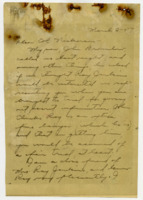
Correspondence between Colonel John C. Nickerson, Jr. and Margaret C. Brownlow.
Brownlow writes to give Nickerson the name of someone that would be interested in his case, Ray Jenkins, who would eventually join Nickerson's defense counsel with Robert K. Bell, along with two others. Nickerson responds, thanking Brownlow for the information. He expresses concern over financially securing Jenkins for his defense but hopes that Brownlow could still arrange a meeting in Knoxville, Tennessee. The third letter is a rough draft of Nickerson's response. Brownlow's second letter responds that she was able to get in touch with Ray Jenkins and left him with materials to read on Nickerson's case. Brownlow states she would get back to Nickerson as soon as he says "yes". -
Letter to Ray H. Jenkins from Estes Kefauver and enclosed copies of letters.
Kefauver writes to Jenkins stating that he has enclosed the letter from the Department of the Army regarding the Nickerson case. The following letter addressed to Senator Kefauver is from Major General J. H. Michaelis. In it Michaelis writes that after consideration, the disclosure of certain documents is "too minimal to justify directing or advising the convening authority to drop the charges." He also writes that non-judicial punishment would be "legally objectionable" as Nickerson's offense is not minor. The last letter states the same regarding the dropping of the charges. -
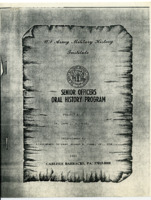
"Senior Officers Oral History Program."
A project of the U.S. Army Military History Institute, this contains the interview of Dr. John L. McDaniel by Lieutenant Colonel Joseph W. Camp, Jr. from 1985. The interview is about the US Army's first satellite into space. McDaniel brings up the case of Colonel Nickerson relative to the interview. This document contains only the portion of the interview that mentions Colonel Nickerson. -
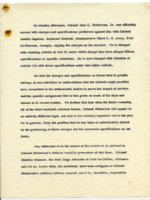
Statement from the defense counsel of Colonel John C. Nickerson, Jr.
This statement insists the charges and specifications against Colonel Nickerson "greatly enlarge on any activities or indiscretion that the Colonel might possibly have committed." The counsel states the Nickerson was simply acting out of enthusiasm to serve the Army. It states that Colonel Charles Zimmer and 1st Lt. Lewis Cole have been assigned to Nickerson's defense. -
Letter to Robert K. Bell from C. F. Cordes.
Cordes writes in response to the defense counsel's request to the Commanding General, Third United States Army, of the trials dates May 13-17, 1957. He confirms that the trials dates have been postponed to the 15th in accordance with their request. -
Letter and drafts of letter to Robert K. Bell from Colonel C. F. Cordes.
This letter is in response to Bell's letter of March 22, 1957 to the Commanding General, Third United States Army. Cordes confirms the reception of Bell's request for the setting of the trial during the week of May 13-17, 1957 and states that Major General Crump Garvin has postponed it to May 15, 1957. -
Letter to Ray H. Jenkins from C. F. Cordes.
In response to Jenkin's request for a postponement of the trial of Colonel Nickerson, Cordes writes that the court will assemble on June 25, 1957 for the trial as the members of the court and court reporter have been granted top secret information neccesary for the case. -
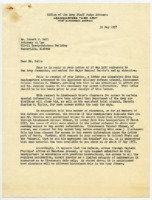
Letter to Robert K. Bell from C. F. Cordes.
This letter was written in response to Bell's May 27, 1957 letter to the Commanding General, Third United States Army requesting top secret clearance for necessary information related to the Nickerson case. According to Cordes, Bell and Jenkins were granted access through Lt. Col. Charles Zimmer. -
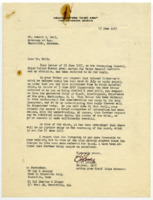
Letter to Robert K. Bell from C. F. Cordes.
This letter was written in response to Bell's June 13, 1957 letter to the Commanding General, Third United States Army requesting the trial of Colonel Nickerson to be postponed until late July or early August. Cordes informs Bell that this request has been denied and the trial will proceed as originally planned on June 25, 1957 and states that no further delay could be permitted. -
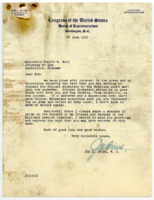
Letter to Robert K. Bell from Joe L. Evins.
Evins writes to Bell of his interest in his involvement in the Nickerson case due to serving with both him and Ray H. Jenkins in the military. -
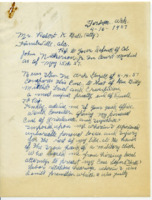
Handwritten letter to Robert K. Bell from C. J. Gibson.
Gibson writes in reference to Bell's defense of Colonel John C. Nickerson, Jr. Gibson mentions comparable cases and his experience with similar situations. -
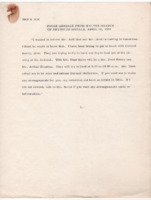
Phone message to Robert K. Bell from Walter Harper.
In this transcript of the phone message to Bell from Walter Harper of Reynolds Metals, Bell is informed that Mr. Hunt will be arriving the following day and will try to land at the air strip at Redstone Arsenal. This information was asked to be passed on to Colonel Nickerson. -
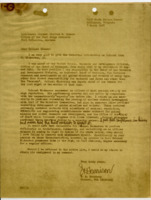
Letter to Lt. Col. Charles R. Zimmer from E. H. Harrison.
Harrison writes of Nickerson's character throughout the letter. He states that if he ever returned to the active list, he would try to obtain "his assignment to my command." -
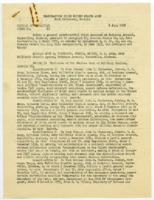
General Court-Martial Order No. 85.
This order outlines the charges brought against Colonel John C. Nickerson, Jr. and the specifications that come with each charge. It also details how Nickerson pled and the sentence associated with the charges. Nickerson was suspended from rank for one year, charged $1,500 per month for fifteen months, and was to be reprimanded. The sentence was adjudged on June 29, 1957. -
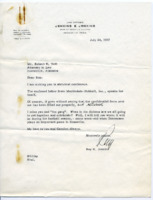
Letter to Robert K. Bell from Ray H. Jenkins.
This letter includes an attached letter from Martindale-Hubbell, Inc. which "speaks for itself" regarding the subject Jenkins in writing about. He states that he is writing Bell in "strictest confidence." The letter from Martindale-Hubbell, Inc. details a confidential report on Keller Smith submitted by Jenkins on July 5, 1957. It also includes information regarding Robert K. Bell's "rating" and that it has "not gone without our attention."