
Browse Items (215 total)
Sort by:
-
Correspondence between George Grant and Robert K. Bell.
Bell writes to Grant in Washington D.C. on behalf of the defense counsel in an attempt to change Nickerson's case from trial by court-martial to a non-judicial punishment. Grant responds with interest and states that it looks as though the Army may "drop the Colonel Nickerson case by non-judicial punishment." -
Correspondence between George Huddleston and Robert K. Bell.
Bell writes to Huddleston in Washington D.C. on behalf of the defense counsel in an attempt to change Nickerson's case from trial by court-martial to a non-judicial punishment. Huddleston responds stating his will "make a discreet request" to Secretary Brucker and General Maxwell. -
Correspondence between George Huddleston, Jr., Lieutenant General Edward M. Almond, and Carl Vinson.
Almond writes to Huddleston in an attempt to get Nickerson brought back from exile in Panama. Huddleston agrees with Almond in his response and says he will do his best to advocate for Nickerson's testimony on the missile program and will bring the matter to the attention of the Chairman, Honorable Carl Vinson. Huddleston's following letter of January 25, 1958 states that Carl Vinson does not believe having Nickerson as a witness is advisable. Huddlestone attaches a copy of Vinson's letter that explains this. Almond writes in response to the decision with his thoughts on the matter and believes that "all service officers will step gingerly in their testimony" so as not to "stick their necks out as General Gavin and Colonel Nickerson have already done." -
Correspondence between John J. Sparkman and Robert K. Bell.
Bell writes to Sparkman in Washinton D.C. on behalf of the defense counsel in an attempt to change Nickerson's case from trial by court-martial to a non-judicial punishment. Sparkman thanks Bell for his letter from May 8 and responds that he has already been "dropping some suggestions" regarding Bell's hope to give Nickerson a non-judicial punishment rather than trial by court-martial. -
Correspondence between Kenneth Roberts and Robert K. Bell.
Bell writes to Roberts in Washington D.C. on behalf of the defense counsel in an attempt to change Nickerson's case from trial by court-martial to a non-judicial punishment. Roberts responds that he has done everything he could on the matter. -
Correspondence between Richey Green and Robert K. Bell.
Green writes to Bell saying he saw him on the news following the Nickerson case and he hopes the results were to his satisfaction. Bell writes to Green in response saying he is pleased at the outcome of Nickerson's trial and asks Green to visit him if he is ever in North Alabama. -
Correspondence between Robert K. Bell and Carl C. Brown.
Brown wishes Bell the best in the Nickerson case and expresses support for the Colonel. Bell's response thanks Brown for his support. -
Correspondence between Robert K. Bell and Colonel William C. Pritchard.
Pritchard writes to Bell, sending a check for Colonel Nickerson to be used for any fines that would be imposed or for the expense of the defense of Nickerson. Bell responds with his sincere thanks and writes that he has given the check to Colonel Nickerson. -
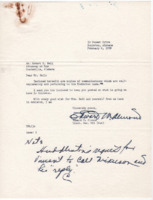
Correspondence between Robert K. Bell and Edward M. Almond.
These letters include information pertaining to the Nickerson case. Almond expresses desire to "get something in motion to subdue the unnecessary and trivial expressions of � General Medaris". The letters also mention various correspondence that was included in the exchange of information. Both men advocate for the "cause" of Colonel Nickerson's actions. Bell was Nickerson's attorney during his trial. -
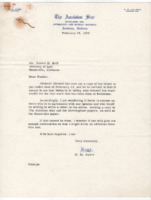
Correspondence between Robert K. Bell and Harry M. Ayers.
In response to Bell's February 13 letter from Edward Almond, Ayers informs Bell that he is attempting to find someone who would write a letter to newspaper publications in agreement with their opinion that Medaris is taking too much credit for his work. Bell responds that he is skeptical Ayers would find anyone as Medaris could make their life a "rather miserable existence". -
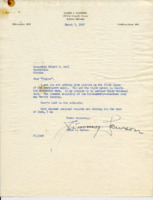
Correspondence between Robert K. Bell and James L. Lawson.
Lawson writes a brief letter to Bell wishing him luck in the Nickerson case and saying he is the right person for the job. Bell responds calls the case a "Herculean one" and hopes he can fulfill the responsibility. -
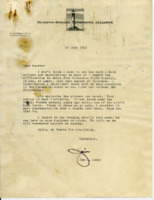
Correspondence between Robert K. Bell and Jim G. Lucas.
Lucas writes to Bell after the Nickerson case and encloses a picture that was requested by Bell. He mentions in closing that Jenkins informed him he will recommend against an appeal. Bell thanks Lucas for the picture and writes he is happy to hear Jenkins recommends against appeal as Bell is having a difficult time keeping Nickerson's "big mouth shut and to forget the word 'appeal'. -
Correspondence between Robert K. Bell and Judge L. C. Walker.
L. C. Walker, Nickerson's uncle by marriage, asks Bell if he and another uncle by marriage could be permitted to sit in on the hearing. Bell responds that they will have seating space for Walker and Mr. Scott. -
Correspondence between Robert K. Bell and R. H. Cox.
Cox writes to Bell asking if he could have the priviledge of reporting Nickerson's case, "unless other arrangements have been made." Cox includes his previous experience with court-martials. Bell responds by explaining that the defense counsel has little influence in the matters of appointing a court reporter. -
Correspondence between Robert K. Bell and Ray H. Jenkins.
Several letters between Bell and Jenkins detail various things from their daily lives, humorous exchanges, the upcoming Tennessee-Georgia Tech football game they are gathering for, and a potential new case Jenkins has regarding workplace injuries and Bell's advice regarding the matter. Bell also includes a few updates on articles that have been published on the vindication of Colonel John Nickerson. -
Correspondence between Robert K. Bell and Thomas C. Ryan.
Ryan writes that he recently saw a picture of Bell in the New York Herald Tribune with Colonel Nickerson. He includes personal details of his life stating he remarried and recently took a trip to Europe. He reminisces of a Caribbean trip they took together a year before his first wife passed away. Ryan also congratulates Bell on the "wonderful result" of the trial. Bell responds, continuing to reminisce on the same Caribbean trip and states he hopes to travel out West and visit with Ryan while there. He concludes by thanking Ryan for the letter. -
Correspondence between Senator Lister Hill and Robert K. Bell.
Bell writes to Hill in Washington D.C. on behalf of the defense counsel in an attempt to change Nickerson's case from trial by court-martial to a non-judicial punishment. Hill responds by thanking Bell for the letter and will do anything to help "along the lines of your suggestion." -
Correspondence between T. C. King and Robert K. Bell and various attached letters.
T. C. King writes to the Secretary of Defense, Neil H. McElroy, regarding the Nickerson case, calling it the "second Billy Mitchell case". He encourages McElroy to restore Nickerson to active duty, return to Redstone Arsenal, promote Nickerson and remove Medaris. The Adjutant General , Herbert Jones, replies that promotions are based on the officers' entire records and Nickerson plead guilty. King's reponse is included. This exchange of letters was forwarded to Robert K. Bell in the interest of the case. -
Correspondence between William J. Waugh and Jesse M. Alverson.
Alverson writes to Waugh to submit a question to the asked at the next presidential press conference along with a follow-up question. The question regards the President's opinion on the missile program and Colonel Nickerson's actions. Waugh responds that the Washington bureau will do what it can to get her questions answered. -
Correspondence from William Nichols to Robert K. Bell containing a letter from William G. Barry.
William Nichols writes to Robert K. Bell, enclosing a letter from Lieutenant Colonel William G. Barry. The enclosed letter requests William Nichols' presence at the Nickerson trial at an undetermined date. It states that a subpoena will be sent when a date is set.