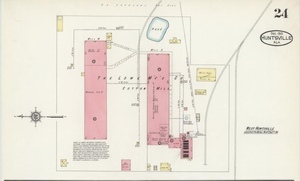
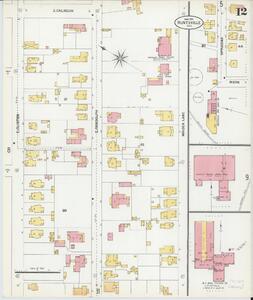
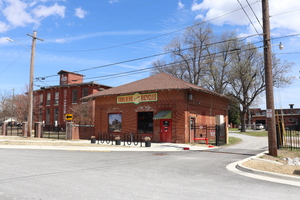
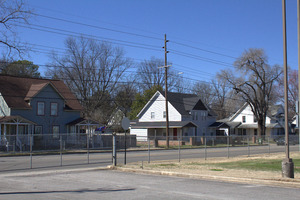
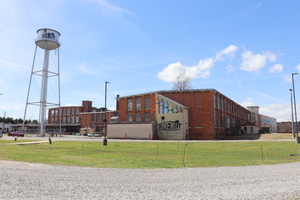
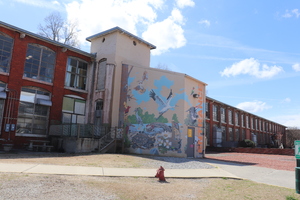
This is the current view of the historic Paymaster's Office, featuring Lowe Mill Arts and Entertainment in the background. The office has currently been repurposed as a studio for the arts center and is functioning as a bike store.
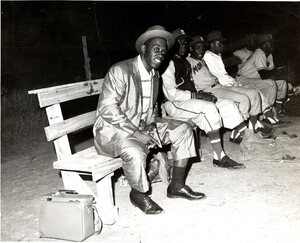
The All-Star Negro League played exhibition games at Dallas (Optimist) Park throughout the early to mid-20th century. Since African Americans were not allowed to join the Major Leagues, many of them played for the Negro League.
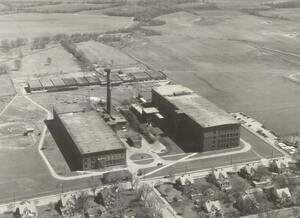
An aerial view photograph of phase 2 Merrimack Mill, showcasing the addition of the second mill building and the few houses of the mill village that were right in front of the mill.
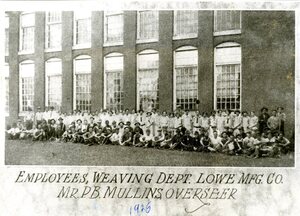
Lowe Mill featured a variety of departments in the 1920s and produced a variety of textiles. This photo, taken in 1925, highlights the Weaving department of the textile mill.
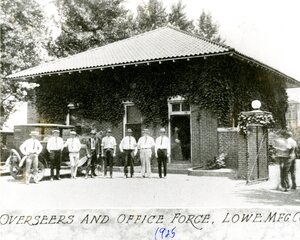
The paymaster's office was built in 1910 and was an addition to Lowe Mill to provide the office staff a place to work separately. This photo depicts several of the workers who would have used the office located just outside Lowe Mill.
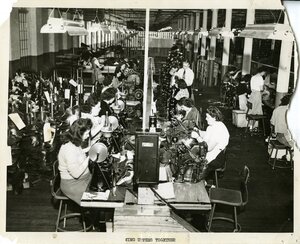
After Lowe Mill closed, it reopened as a shoe factory after the Great Depression. This photo depicts several of the workers making shoes that were used across the country.
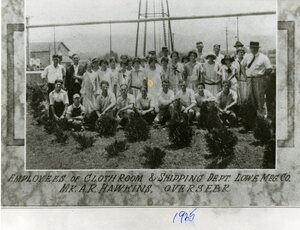
Lowe Mill relied heavily off of a water tower to maintain its production capabilities as a textile mill. The shipping and cloth room employees pose for a photo in front of the water tower in 1925.
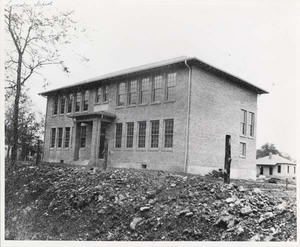
The Lincoln School, prior to its demolition in 1929, was built to educate the children of the mill workers at Mill No. 3. The building was demolished so that a new, larger school could be constructed.