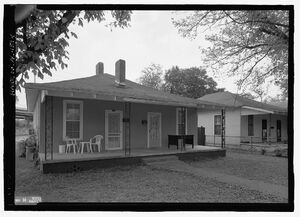
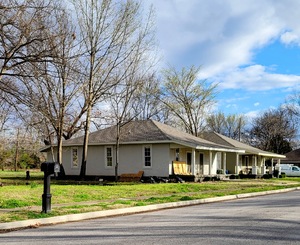
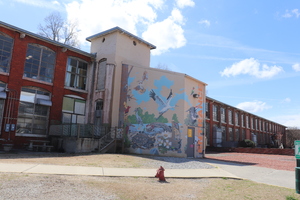
These homes in Lincoln Mill Village are located behind Lincoln School. The houses were built to provide accommodation for mill workers. The photograph was taken in March 2025.
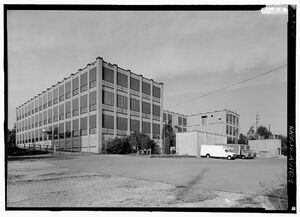
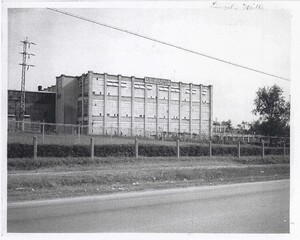
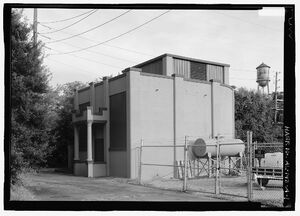
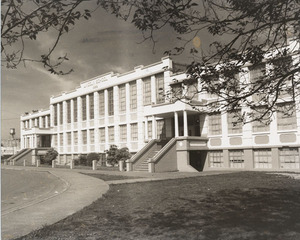
View looking east of Lincoln Mill (originally Mill No. 3 of a larger complex that no longer stands). Built 1927 - Lincoln Mill, Abington Avenue, Huntsville, Madison County, AL
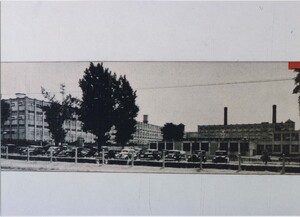
A photograph of Lincoln Mill in Huntsville, Alabama, from the 1930s. The original Mill No. 3 and the dye house can be seen behind the row of mill workers' cars.
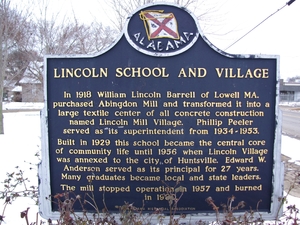
The inscription of the Lincoln School and Village marker reads:
In 1918 William Lincoln Barrell of Lowell MA. purchased Abingdon Mill and transformed it into a large textile center of all concrete construction named Lincoln Mill Village. Phillip Peeler served as its superintendent from 1934-1953.
Built in 1929 this school became the central core of community life until 1956 when Lincoln Village was annexed into the city of Huntsville. Edward W. Anderson served as its principal for 27 years. Many graduates became local and state leaders.
The mill stopped operation in 1957 and burned in 1980.
The historical marker was erected by the Alabama Historical Association in 1985.
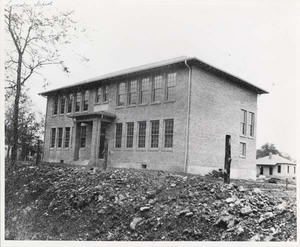
The Lincoln School, prior to its demolition in 1929, was built to educate the children of the mill workers at Mill No. 3. The building was demolished so that a new, larger school could be constructed.
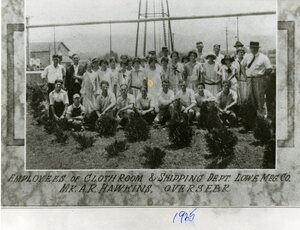
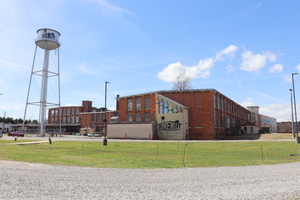
Lowe Mill relied heavily off of a water tower to maintain its production capabilities as a textile mill. The shipping and cloth room employees pose for a photo in front of the water tower in 1925.
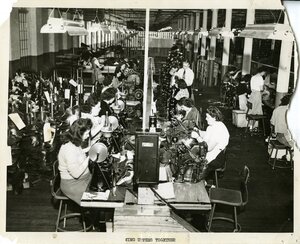
After Lowe Mill closed, it reopened as a shoe factory after the Great Depression. This photo depicts several of the workers making shoes that were used across the country.
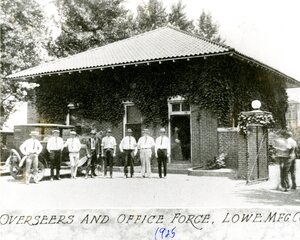
The paymaster's office was built in 1910 and was an addition to Lowe Mill to provide the office staff a place to work separately. This photo depicts several of the workers who would have used the office located just outside Lowe Mill.
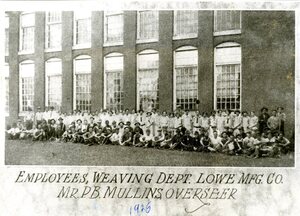
Lowe Mill featured a variety of departments in the 1920s and produced a variety of textiles. This photo, taken in 1925, highlights the Weaving department of the textile mill.