
Browse Items (456 total)
Sort by:
-
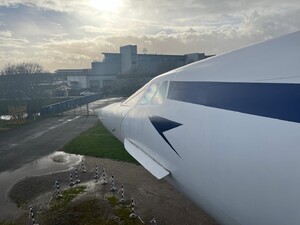
British Airways Concorde nose from front exit stairs
The Concorde is the world's first supersonic commercial aircraft. Due to maintenance costs and noise issues, the plane was retired in 2003. Since then, Concorde has become a British icon. Exhibits such as this one at Brooklands Museum share a goal of presenting the innovation and passenger experience of Concorde. -
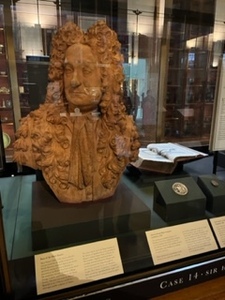
Bust of Sir Hans Sloane in the British Museum
This image is an image of Sir Hans Sloane. This is a terracotta bust. This bust was donated to the British Library after Sir Hans Sloane died. This bust was made by Michael Rysbrack. -
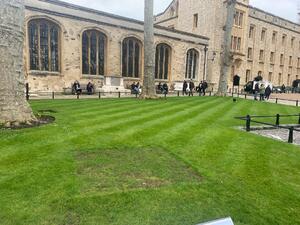
Tower of London tower green.
A field within the Tower of London. This is where nobility were executed, away from the traditional crowds. Katherine Howard was one of three queens beheaded here. -
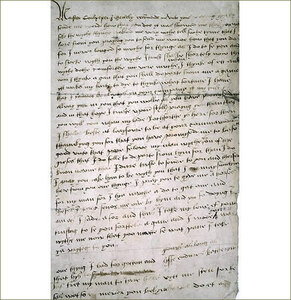
Katherine Howard's letter to Thomas Culpeper
This is the only surviving letter written by Katherine Howard. It is addressed to Thomas Culpeper, whom she was accused of having an affair with. The letter can be interpreted in many different ways, from evidence of the affair to the possibility of Katherine being blackmailed. -
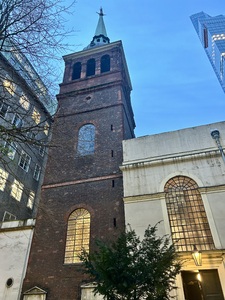
St. Peter's Cornhill.
A picture of St. Peter's Cornhill, a church that Sir Christopher Wren built after the London fire in 1666. -
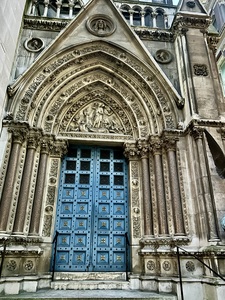
St. Michael Cornhill.
St. Michael Cornhill is a church that stands on one of the oldest Christian sites in Britian, dating back to Roman occupation. It was rebuilt by Sir Christopher Wren in 1672 after the London Fire in 1666. The tower was built by Nicholas Hawksmoor in 1722. It was later restored by Sir George Gilbert Scott in 1860. -
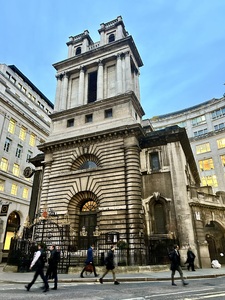
St. Mary Woolnoth.
St. Mary Woolnoth is one of the churches rebuilt after the London Fire. It had partly survived the fire but after considerable repairs in 1670, it was determined that it needed to be rebuilt in the 18th century. While this one is traditionally credited to Hawksmoor, it was rebuilt by the Commision that rebuilt about 50 churches in London, which Sir Christopher Wren is usually credited. -
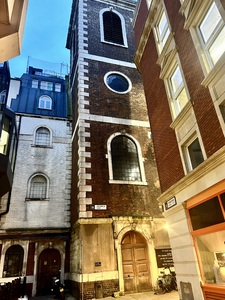
St. Mary Abchurch.
St. Mary Abchurch is one of the churches rebuilt after the London Fire in 1666, traditionally credited to Sir Christopher Wren. It is also the home of the friends of the city churches. -
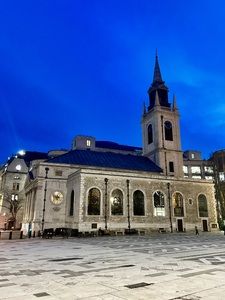
St. Lawrence Jewry.
St. Lawrence Jewry is a church dating back to the 12th century in London. It was destroyed by the London Fire in 1666 and was rebuilt by Sir Christopher Wren. It was destroyed by fire in December 1940 during World War II. It was restored in 1937, keeping with Wren's designs. It was repaired and conserved in 2023. -
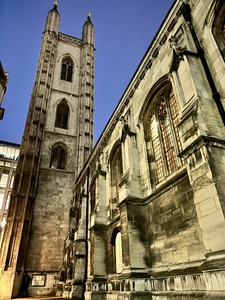
St. Mary Aldermary.
St. Mary Aldermary was rebuilt 1679-82 by Sir Christopher Wren's office after the London Fire in 1666. The current plan of the church follows its medieval outline. -
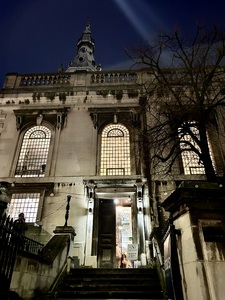
St. Nicholas Cole Abbey.
St. Nicholas Cole Abby Centre for Workplace Ministry was one of the churches that was destroyed in the London Fire in 1666. It was the first church rebuilt by Sir Christopher Wren. It has gone through many changes in the last hundred years, but today it is home to The Wren, a coffee shop, and a workplace ministry. -
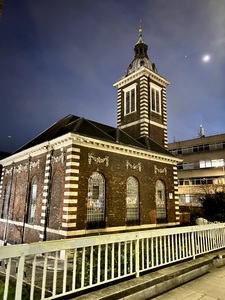
St. Benet Paul's Wharf.
St. Benet Paul's Wharf dates back to the 12th century in London. It was rebuilt by Sir Christopher Wren after it was destroyed in 1666 due to the London Fire. It is one of the few churches that was sparred during the Blitz in World War II. Today, it is a Welsh Anglican Church. -
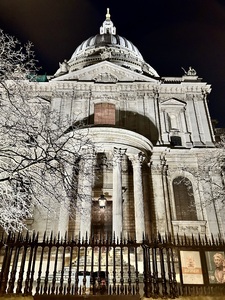
St. Paul's Cathedral.
St. Paul's Cathedral dates back to 604. It was destroyed in 1666 due to the London Fire. Sir Christopher was contracted to rebuild the Cathedral as part of the Commission to rebuild London's churches. It was completed in 1711. -
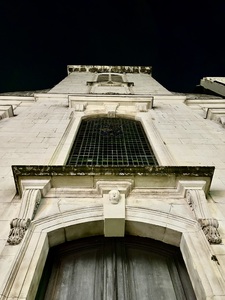
St. Martin-within-Ludgate.
St. Martin-within-Ludgate is a medieval church that dates back to 1437. It was destroyed in 1666 due to the London Fire. Sir Christopher Wren rebuilt it in 1684 and it remains largely unchanged. -
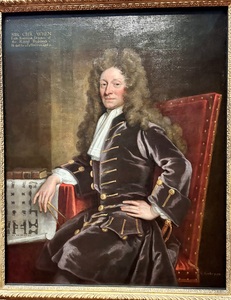
Portrait of Sir Christopher Wren.
At the National Portrait Gallery, there is a painting of Sir Christopher Wren. Wren was the King's Surveyor of Works following the Great Fire of 1666. He was heavily involved in the rebuilding of 51 parishes in London after the fire. -
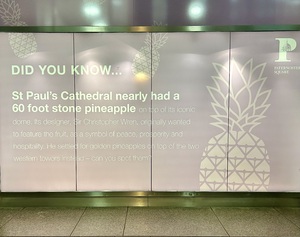
Information Board in London.
This information board exists around St. Paul's Cathedral. It discusses how Sir Christopher Wren, the architect of St. Paul's, wanted to feature a pineapple in the Cathedral because it is a symbol of peace, prosperity, and hospitality. It states that there are two golden pineapples on top of two of the western towers. -
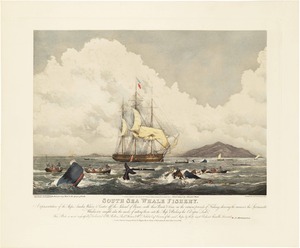
South Sea Whale Fishery
A colored aquatint depicting 19th century British whaling vessels hunting sperm whales off the island of Buru -
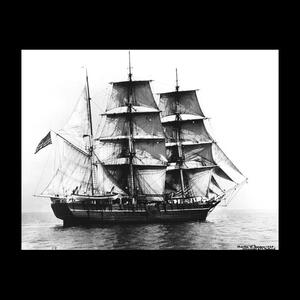
Bark Charles W. Morgan under sail
A photograph taken in 1920 of the Charles W. Morgan under sail -
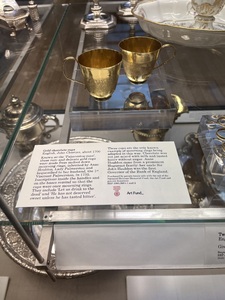
Photo of The Palmerstone Gold Chocolate Cups
This is a photo of The Palmertstone Gold Chocolate Cups. This photo was taken during the UAH Study Abroad to London. These cups are located at the British Museum. These cups were created by John Cartier in 1700. -
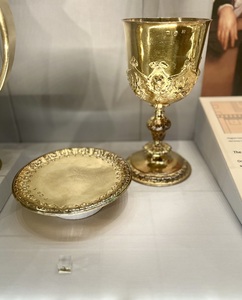
Paten and Chalice.
This paten and chalice were created for St. James Picadilly in 1683. It was designed to complement Sir Christopher Wren's, the architect of the church, rich interior.