
Browse Items (456 total)
Sort by:
-
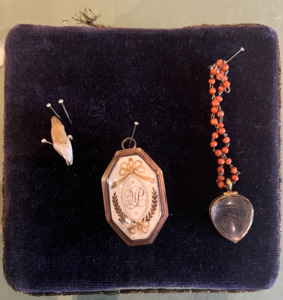
Katherine Parr Grave Robberies
The tooth, necklace, and emblem of Katherine Parr that were stolen from her grave during a violent robbery that destroyed what remained of her body. The items were eventually returned to Sudeley Castle. -
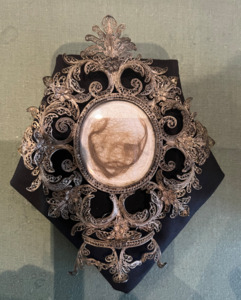
Katherine Parr Locket
Locket belonging to Katherine Parr containing perfectly preserved strands of her hair that have allowed us to confirm her hair texture, type, and color. Although the locket was stolen from her grave during a violent robbery that destroyed what remained of her body, the item was eventually returned to Sudeley Castle. -
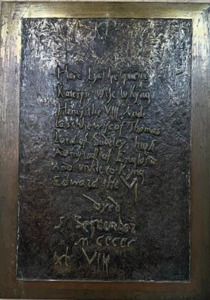
Recreation of Katherine Parr's Tomb Inscription
Recreation of Katherine Parr's tomb inscription. -
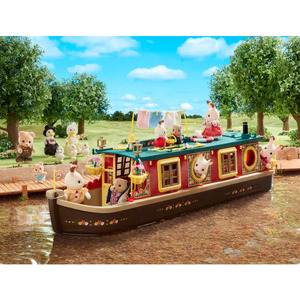
Sylvanian Families River Canal Boat
The Sylvanian Families River Canal Boat offers a delightful miniature scene of leisurely life on the water. This charming boat features living quarters with windows, a deck area with laundry hanging out to dry, and ample space for Sylvanian Families to relax and enjoy a scenic journey. Canal boats are a significant part of British waterways history and culture, originally used for transporting goods and now enjoyed for peaceful holidays. This playset beautifully captures the essence of canal life, reflecting a slower pace and appreciation for the countryside that is often associated with British traditions. -
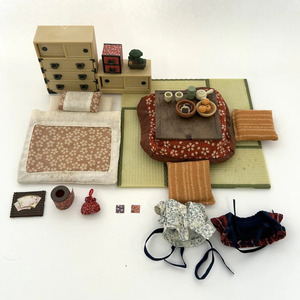
Sylvanian Families Japanese Room
The Sylvanian Families 20th Anniversary Japanese Room Set offers a charming miniature glimpse into traditional Japanese living. It features a low kotatsu table with futon coverings, perfect for gathering and staying warm, along with zabuton cushions for comfortable seating on the tatami mat flooring. The set also includes a tansu chest for storage and a decorative bonsai tree, all evoking a sense of Japanese home decor. This set beautifully represents the importance of communal spaces, floor-level living, and appreciation for natural elements within Japanese culture. -
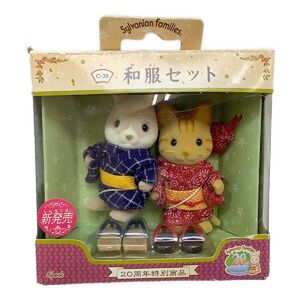
20th Anniversary Kimono Set Sylvanian Families
This enchanting Sylvanian Families 20th Anniversary Kimono Set features two adorable figures dressed in traditional Japanese attire. The figure on the left sports a dark blue kimono with a white diamond pattern and a vibrant yellow obi belt, while the figure on the right wears a striking red kimono adorned with delicate white and red floral designs, complemented by a gold obi. Complete with traditional zori sandals, this set beautifully captures the essence of Japanese cultural clothing. It serves as a charming representation of Japan's rich heritage and aesthetic. -
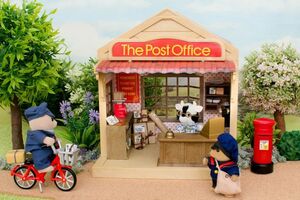
Post Office playset for Sylvanian Families Figurines
The Sylvanian Families Post Office playset beautifully captures elements of British culture. The set includes a charming post office building, complete with a classic red post box, an iconic symbol of British postal services. The postman figure, dressed in a traditional uniform, signifies the importance of mail and newspaper delivery in British society. This playset offers a delightful glimpse into a familiar aspect of British life. -
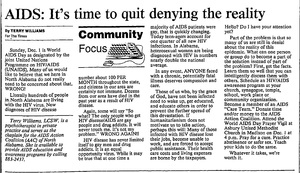
AIDS: It's time to quit denying the reality
A digitization of a 1996 edition of the Huntsville Times. Psychotherapist Terry Williams wrote an article for the Community Focus part of the newspaper for World AIDS Day to talk about the reality of AIDS. -
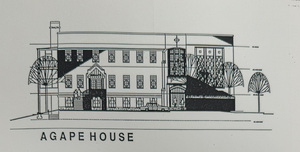
Art of The Agape House
Line art of the building that would become the Agape House in Birmingham, Alabama. This art was on fundraising materials for the residence house. -
-
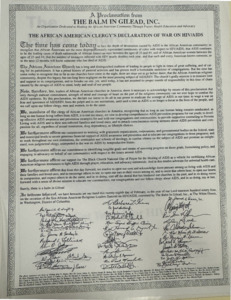
The Balm of Gilead - War on AIDS
A publication of the Balm of Gilead organization. It is a declaration of war on HIV/AIDS by African-American clergy, and many of them signed it. -
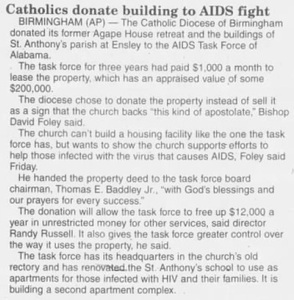
Catholics donate building to AIDS Fight
A press release about the Catholic Diocese of Alabama gifting the AIDS Taskforce of Alabama the building containing the Agape House AIDS Housing. This is from a digitization of the Selma Times Journal newspaper. -
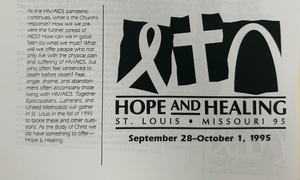
Hope and Healing Conference
A flyer about the Hope and Healing interfaith conference happening in St. Louis, Missouri. -
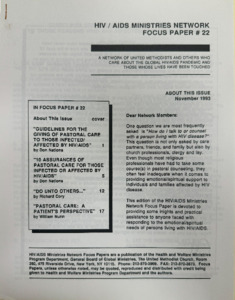
Focus Newsletter #22
A newsletter published by the Health and Welfare Ministries Program Department of the United Methodist Church with articles about caring for people with HIV/AIDS. -
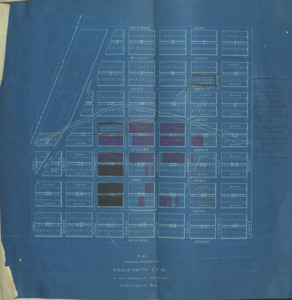
Blueprint of Dallas Mill Village, 1893
This blueprint of the Dallas Mill Village was created by Oscar Goldsmith, owner of the Huntsville Land Company and Treasurer of Dallas Manufacturing Company, to show the Dallas board of directors the expansion of the mill village. By February 20, 1893, the Huntsville Land Company had built 50 double houses for the employees of Dallas Mill and was contracted to build 25 more that year. The blocks highlighted in red are were homes were already built in February 1893 and the blocks in black are the planned construction sites. -
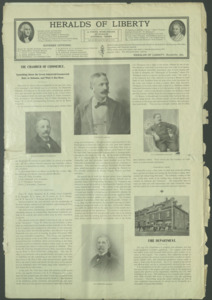
Huntsville Chamber of Commerce Page in the Huntsville Post, 1900
This is a page from the December 27, 1900, Art Industrial Edition of the Huntsville Post. This newspaper was used as a promotional material for the City of Huntsville. On this page, is an advertisement for the Heralds of Liberty, a progressive organization in Huntsville, and an article about the work of the Huntsville Chamber of Commerce. The men photographed on the page are Oscar Goldsmith, Vice-President; T.W. Pratt, President; H.J. Lowenthal, Treasurer; and N.F. Thompson, Secretary. -
-
-
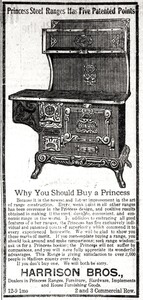
Harrison Brothers Princess Steel Ranges Advertisement, 1911
This is a 1911 Harrison Brothers Hardware store advertisement from The Huntsville Times. The store is advertising the Princess Steel Range and lists the reasons why one should buy a Princess. -
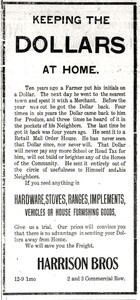
Keeping the Dollars at Home Harrison Brothers Advertisement, 1911
This is a Harrison Brothers Hardware advertisement posted in the Huntsville Times in December 1911. The advertisement title "Keeping the Dollars at Home" tells the story of a farmer who loses his money to a retail mail order house. The advertisement boasts Harrison Brother's low prices for hardware, stoves, ranges, implements, vehicles, and house furnishing goods without the freight charge.