
Browse Items (395 total)
Sort by:
-
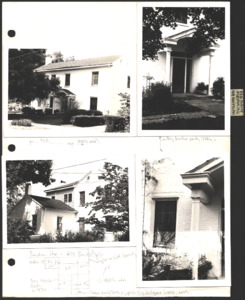
Architecture notebook 22: Purdom House, at 409 Randolph St., Huntsville, Alabama.
Purdom House, Located at 409 Randolph St., Huntsville. Alabama. Built in the early 19th century, probably by the architect Edgar Love. Additions by George Steele. Federal Period. -
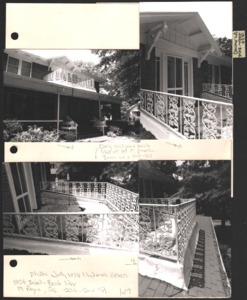
Architecture notebook 23: Isbell-Beck House, at 206 2nd St., Fort Payne, Alabama.
Isbell-Beck House, built c. 1924 by contractor Jack Chitwood for John B. Isbell. Designed by Mrs. Isbell. Prairie style. Located at 206 2nd St., Fort Payne, Alabama. -
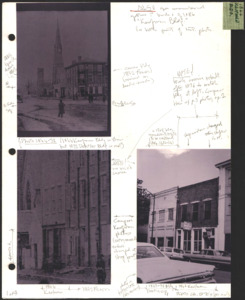
Architecture notebook 23: Kaufman Building, at 206 Eustis Ave., Huntsville, Alabama.
Kaufman Building, built 1866. Located at 206 Eustis Ave., Huntsville, Alabama. Originally a confectioner's shop owned by Kate and Peter Kaufman. -
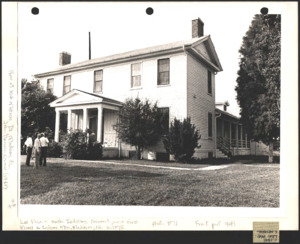
Architecture notebook 23: Lee House, in Madison, Alabama.
Lee House, built c. 1841. Federal period. Originally located south of Redstone Arsenal in Huntsville, Alabama. Moved c. 1975 to 104 Metaire Dr. in Madison, Alabama on Rainbow Mtn. -
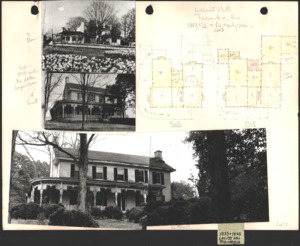
Architecture notebook 23: Locust Hill House, in Tuscumbia, Alabama.
Locust Hill, built 1823 and renovated 1865. Federal, Victorian, and early 20th century styles. Located in Tuscumbia, Alabama. -
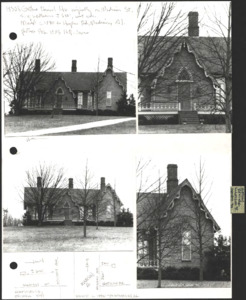
Architecture notebook 23: Madison House, in Huntsville, now Madison, Alabama.
Madison House, built 1850s. Gothic Revival style. Originally located on Madison St. in Huntsville, Alabama. Moved c. 1980 to Hughes Rd. in Madison, Alabama. -
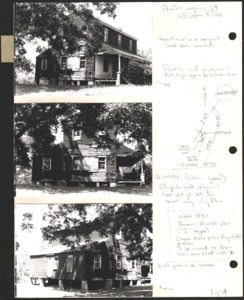
Architecture notebook 23: Parmer-Murrel-Payne House, in Montgomery County, Alabama.
Parmer-Murrel-Payne House, built c. 1830. Federal period "I" type house. Originally located on Cloverfield Rd. Moved and restored 1989-1990. Located near Pintlala in Montgomery County, Alabama. -
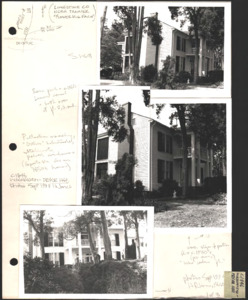
Architecture notebook 23: Washington-Pryor House, or Flower Hill Farm, in Limestone County, Alabama.
Washington-Pryor House, also known as Flower Hill Farm, built c. 1846. Gothic and Victorian styles. Located near Tanner in Limestone County. -
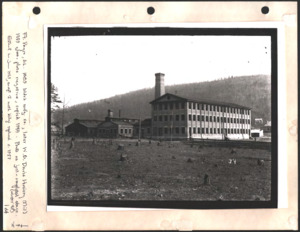
Architecture notebook 24: W.B. Davis Hosiery Mill, in Fort Payne, Alabama.
W. B. Davis Hosiery Mill, also known as the Alabama Builders' Hardware Manufacturing Company and Bonnie Mills, built c. 1889. Colonial Revival style. Located at 204 8th St. NE in Fort Payne, Alabama. Placed on National Register of Historic Places in the mid 1980s. This mill was important for revival of industrial development in Fort Payne, particularly in hosiery and sock manufacturing. At one point the town earned the title of "Sock Capitol of the World." -
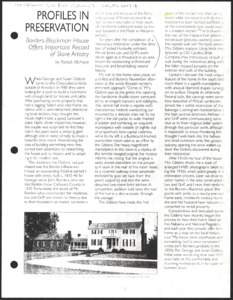
Architecture notebook 26: Borders-Blackman House, in Anniston, Alabama.
Borders-Blackman House, built c. 1840. Late-Federal period "I" type house. Located north of Anniston, Alabama. The master carpenters who built the residence, Lev and Griff, were enslaved to John Borders, the first resident of the home. -
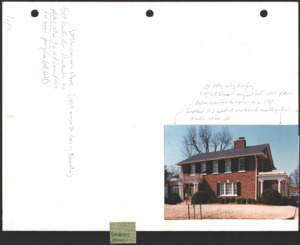
Architecture notebook 28: Geron House, at 509 Eustis Ave., Huntsville, Alabama.
Geron House, built 1926. Located at 509 Eustis Ave., Huntsville, Alabama. -
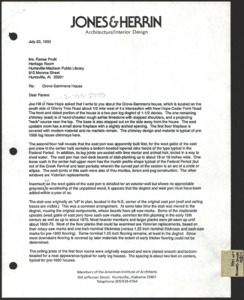
Architecture notebook 28: Grove-Sammons House, in New Hope, Alabama.
Grove-Sammons House, built c. 1830-1840. Federal period log dogtrot building with Victorian renovations. Located on the south side of Cherry Tree Rd. in New Hope, Alabama. -
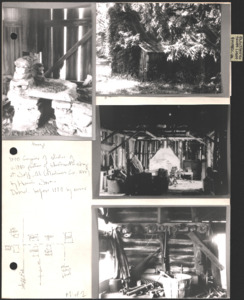
Architecture notebook 28: Jeff Blacksmith Shop, in Jeff, Alabama.
Jeff Blacksmith shop. Located in Jeff, Alabama in Madison County. Demolished pre-1990. -
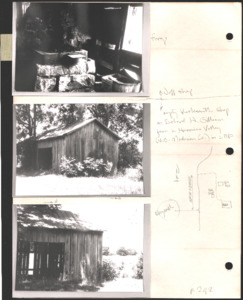
Architecture notebook 28: Maysville Blacksmith Shop, in Maysville, Alabama.
Maysville Blacksmith shop. Located on Richard H. Gilliam farm in Maysville, Alabama in northeast Madison County. -
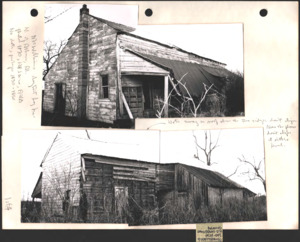
Architecture notebook 28: McWilliams Log House, in Limestone County, Alabama.
McWilliams Log House, built c. 1830-1850. Located in north of Athens in Limestone County, Alabama. -
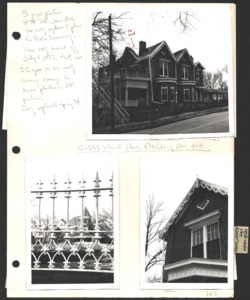
Architecture notebook 28: Ward House, at 424 McClung Ave., Huntsville, Alabama.
Ward House, built c. 1858. Downing style. Located at 424 McClung Ave., Huntsville, Alabama. -
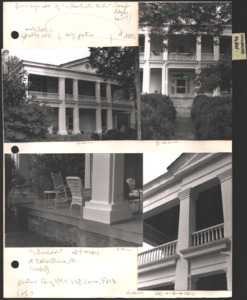
Architecture notebook 28: Woodside, in Belle Mina, Alabama.
Woodside, built c. 1840s. Greek Revival and Victorian styles. Located in Belle Mina, Alabama. -
Architecture notebook 29: Wheeler House, Cotton Garden, and Pond Spring, in Lawrence County, Alabama.
Joe Wheeler Plantation, also known as the Sherrod-Wheeler House, Cotton Garden, and Pond Spring. A group of thirteen buildings built in the range of c. 1818 to c. 1880: Early 1800s log center-hall barn. Early 20th century frame barn. 19th century log ice house. Servants' house. Pole barn built 20th century. Comissary built c. 1900. Log house built c. 1818. Log dogtrot house built c. 1820. Schoolhouse. The c. 1830 Sherrod House. General Joe Wheeler's post-Civil War period house built c. 1884. Family cemetery. Located in Lawrence County, Alabama. Joseph Wheeler was a Confederate Army General and seved in the Spanish-American War. -
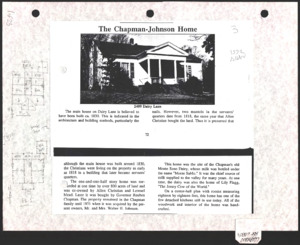
Architecture notebook 3: Chapman House, or the Chapman-Johnson Home or Reuben Chapman House, at 2409 Dairy Lane, Huntsville, Ala.
Chapman House, also known as the Chapman-Johnson Home and the Reuben Chapman house, built c. 1830. Greek Revival style. Includes a house for enslaved servants and smokehouse built c. 1850s. Located at 2409 Dairy Lane, Huntsville, Alabama. The property used to be the Chapman dairy, which suppled milk for the Monte Sano area, and it was the dairy where the cow Lily Flagg was kept. -
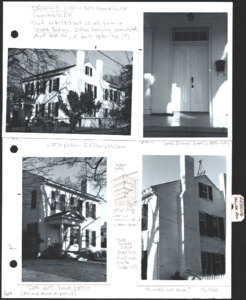
Architecture notebook 3: Erskine Clark House, at 515 Franklin St., Huntsville, Ala.
Erskine Clark House, built 1819 and heavily remodeled c. 1840-1850 or built c. 1840-1850. Federal and Greek Revival styles. Located at 515 Franklin St., Huntsville, Alabama.