UAH Archives, Special Collections, and Digital Initiatives

HY 494/594 Huntsville Textile Mills Digital Project

Dublin Core

Identifier

HY 494/594 Huntsville Textile Mills Digital Project

Title

HY 494/594 Huntsville Textile Mills Digital Project

Collection Items
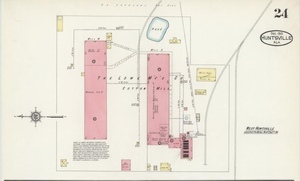
  • Sanborn Map of Lowe Mill in 1913

    Sanborn Map featuring Lowe Mill in 1913. In addition to the main building, it also features the paymaster's office.
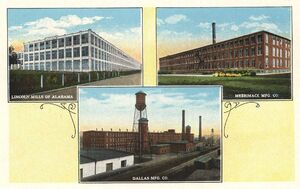
  • Lincoln Mills, Dallas Mfg. Co., Merrimack Mfg. Co.

    Postcard type illustration depicting Lincoln Mills of Alabama, Merrimack Mfg. Co., and Dallas Mfg. Co.
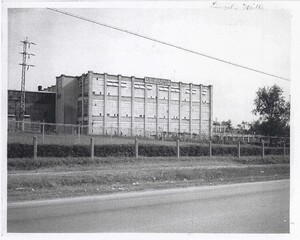
  • Lincoln Mill, c. 1924
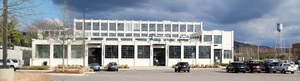
  • Lincoln Mill, 2025-03-16

    Lincoln Mill has transitioned from a textile mill to a military complex and now serves as a vibrant cultural and commercial space.
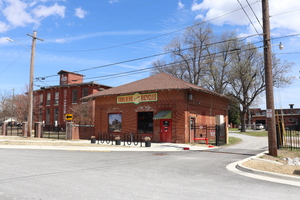
  • Paymaster's Office With Lowe Mill in the Background

    This is the current view of the historic Paymaster's Office, featuring Lowe Mill Arts and Entertainment in the background. The office has currently been repurposed as a studio for the arts center and is functioning as a bike store.
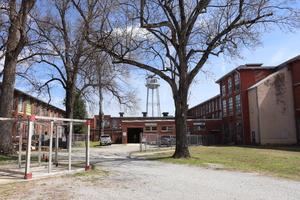
  • Current View Behind Paymaster's Office Toward Lowe Mill

    A view of Lowe Mill behind the old paymaster's office and current studio, bike store. It features the water tower in the background.
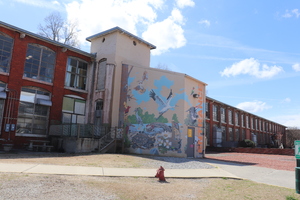
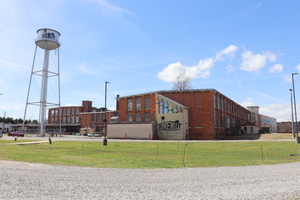
  • Lowe Mill Side

    A side view of Lowe Mill from the parking lot. This shows the historic windows as well as the incorporation of modern art.
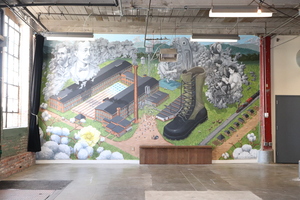
  • Lowe Mill History Mural Inside

    A mural inside of Lowe Mill depicting Lowe Mill's history as a textile mill and shoe factory. This mural was created by Logan Tanner.
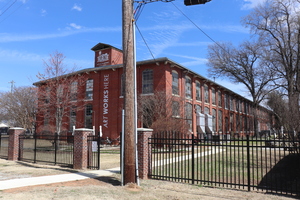
  • Entrance to Lowe Mill

    A street view of Lowe Mill from the corner of Seminole and 9th Avenue. This is one of the many entrances to the modern Lowe Mill Arts and Entertainment Center.
  • Lowe Mill with Water Tower

    A view of Lowe Mill from the back parking lot. This photo features both the water tower and the loading dock.
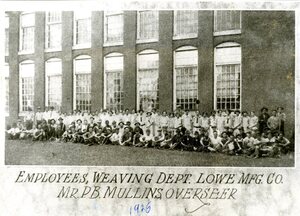
  • Lowe Mill Weaving Dept.

    Lowe Mill featured a variety of departments in the 1920s and produced a variety of textiles. This photo, taken in 1925, highlights the Weaving department of the textile mill.
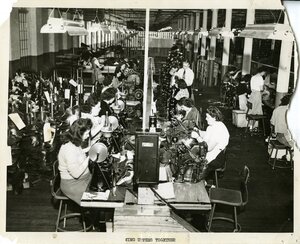
  • Lowe Mill Making Shoes

    After Lowe Mill closed, it reopened as a shoe factory after the Great Depression. This photo depicts several of the workers making shoes that were used across the country.
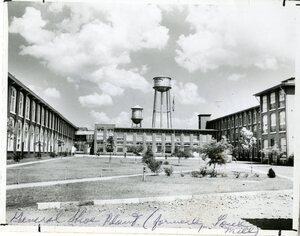
  • Behind Paymaster's Office at Lowe Mill

    Lowe Mill was converted many times throughout its lifespan into different factories and storage facilities. This aerial view shows the changes made across the years.
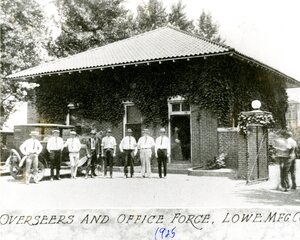
  • Lowe Mill Paymaster's Office

    The paymaster's office was built in 1910 and was an addition to Lowe Mill to provide the office staff a place to work separately. This photo depicts several of the workers who would have used the office located just outside Lowe Mill.
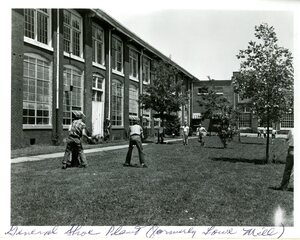
  • Genesco Baseball

    Baseball was one of the many fun activities done between mill workers to promote bonds and community among them. Lowe Mill, later Genesco, a shoe plant as depicted here, was no exception to this.
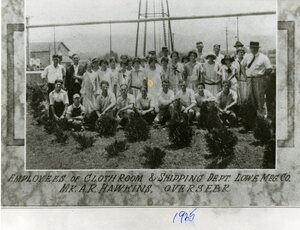
  • Lowe Mill Cloth Dept.

    Lowe Mill relied heavily off of a water tower to maintain its production capabilities as a textile mill. The shipping and cloth room employees pose for a photo in front of the water tower in 1925.
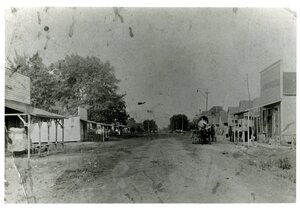
  • Lowe Mill Main Street

    The village surrounding Lowe Mill in the early 1900s. It features several stores as well as a wide road, and a horse and buggy carriage.
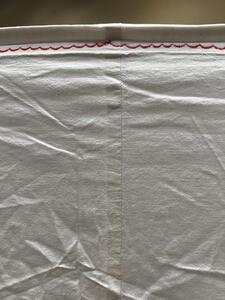
  • Dallas Mills Sheet

    a sheet made by Lawrence Hillis’ grandmother, Hattie Dunham Warren. Warren accumulated approximately 20 sheets from 1918 to 1924 while she worked at the mill. The sheets would be sewn together to fit a bed, and after work Warren added red scalloped stitching for a personal touch.
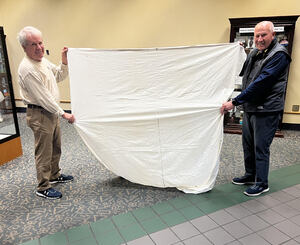
  • Larry Layne and Lawrence Hillis with Dallas Mills Sheet

    Larry Layne and Lawrence Hillis holding up a sheet made by Hillis’ grandmother, Hattie Dunham Warren. Warren accumulated approximately 20 sheets from 1918 to 1924 while she worked at the mill.
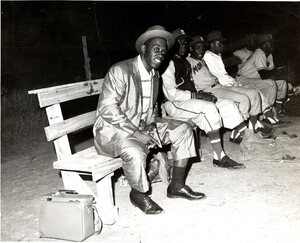
  • Negro League Baseball Players Ted Rasberry, Sam Allen, and Eugene Scruggs

    The All-Star Negro League played exhibition games at Dallas (Optimist) Park throughout the early to mid-20th century. Since African Americans were not allowed to join the Major Leagues, many of them played for the Negro League.

Collection Tree