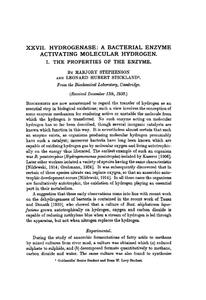
This document is a copy of one of Marjory Stephenson's, along with her colleague L.H. Strickland, most important papers, the discovery of the hydrogenase enzyme. It is just one of her many research papers on enzymes that laid the foundation for detailed studies of metabolism, both in bacteria and higher-level organisms.
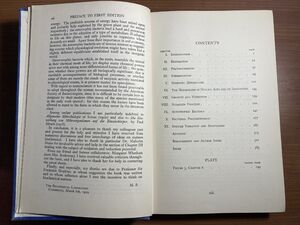
Marjory Stephenson's Bacterial Metabolism is a collection of the most important techniques, studies, and information regarding the fields of chemical microbiology and bacterial biochemistry, citing numerous scientists and scientific papers, several of them her own. This photo contains its table of contents and the last few paragraphs of her own introduction to this monograph.
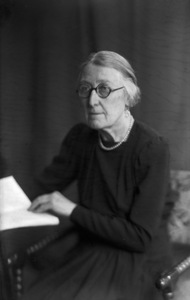
This photo of Marjory Stephenson, taken by Walter Stoneman in 1940, is housed at the National Portrait Gallery in London, UK. It is one of the few photos that exist of her.
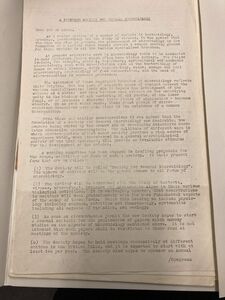
This document details the proposal for the Society of General Microbiology to be established, including why such a society needs to be created, how the society is to be named and operated, the expected rules and guidelines the society aims to follow, and a list of people that are involved, later known as the Society's Original Members and Inaugural Committee.
This document contains a list of the original members of Europe's first and largest microbiology society, the Society of General Microbiology. Founded in 1944 by Marjory Stephenson and Sir Alexander Fleming, it allowed scientists a chance to collaborate and build a community together in the newly emerging fields of bacterial biochemistry and general microbiology.
This document was viewed and photographed at the National Archives in Kew, UK. It's purpose serves as a review of chemical microbiology research occurring at the University of Cambridge as well as the list of people involved in said research from the years 1947-1948, though some of the individuals listed have moved onto other labs at the time of publication.
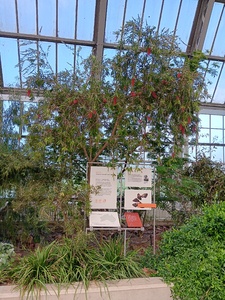
A photo of Banksia Brownii (the feather-leaved banksia), a plant indigenous to the far south-western corner of Western Australia. It is currently listed as critically endangered with an estimate of only 1,000 plants in the wild.
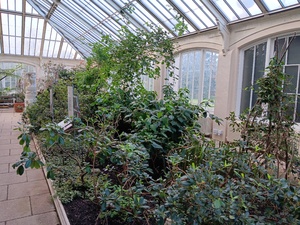
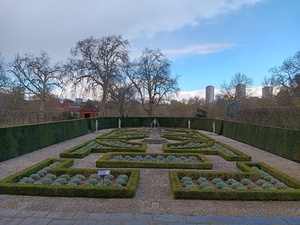
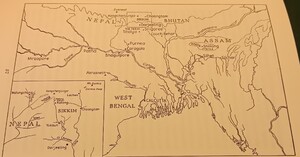
A photo of a plant bed in the Temperate House showcasing a collection of plants from the Himalayas. From 1847-1851, J.D. Hooker collected over 5,000 specimens from the Himalayan range.
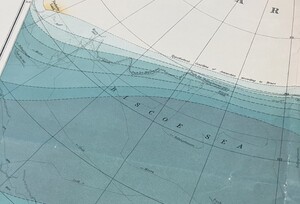
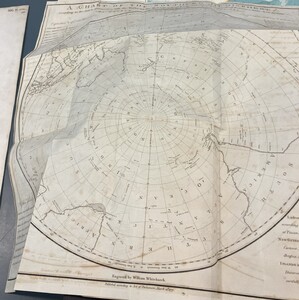
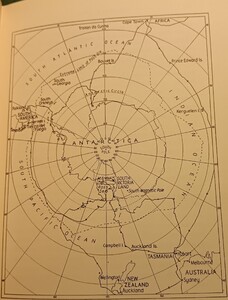
"Map to illustrate Hooker's travels in the Southern Hemisphere, the black line with arrows showing the route taken by Erebus and Terror under the command of Captain James Clark Ross."
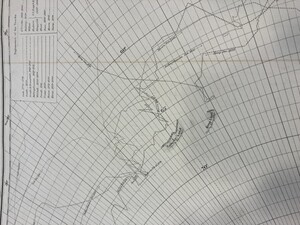
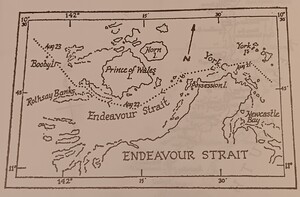
"Track of H.M.S. Endeavour and the passage through Endeavour Strait, 21 August–23 August 1770. Reproduced from 'The Endeavour Journal of Joseph Banks, 1768–1771'."
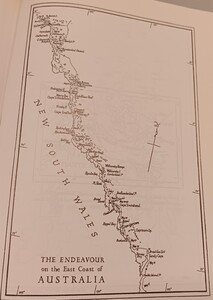
"Track of H.M.S. Endeavour exploring part of the coast of New South Wales, 17 May–25 August 1770. Reproduced from 'The Endeavour Journal of Sir Joseph Banks, 1768–1771'."